

State of Robot Data 2026
The 2026 edition of our yearly robot data report: the six kinds of robot learning data, the open datasets that define the field, formats and quality practice, publicly reported costs, and what our own public dataset catalog and data services show.
2026 edition, updated November 11, 2026. This page is revised in place each year. Download the PDF edition.
Key takeaways
Robot learning in 2026 runs on a mix of data, not one kind. Teleoperated robot demonstrations are still the most direct training signal, and open collections have grown to more than a million trajectories, from Open X-Embodiment's pooled data across 22 robots1 to AgiBot World's 217-task manipulation corpus.2 Next to them, egocentric human video (Ego4D, Ego-Exo4D, EgoDex),345 handheld UMI-style grippers,6 gloves and motion capture,7 simulation and synthetic generation,8 and internet-scale video pretraining9 each cover a part of the problem that robot demonstrations alone cannot reach at the same cost. The most useful planning result of the last two years is that diversity beats volume: policy generalization tracks the number of distinct environments and objects far more than the raw demonstration count.10 Formats have converged on a small set (LeRobot, RLDS, HDF5, MCAP), which makes mixing sources practical. Our own public dataset catalog holds 47 entries as of November 11, 2026: 29 dataset pages covering 26 distinct datasets and hubs, plus 17 guides and comparisons and one custom collection page. Robot demonstrations and simulation each make up 8 of the 26, and half of the 26 carry an open or free license.
The six kinds of robot data
Each kind of data does a different job well. Most serious programs combine two or three of them.
| Data type | What is recorded | What it does best | Representative public work |
|---|---|---|---|
| Teleoperation demonstrations | Robot camera views, joint states and the operator's actions, on the robot itself | The exact embodiment, contact and action space your policy will run on | ALOHA,11 DROID,12 Open X-Embodiment1 |
| Egocentric human video | First-person video of people doing tasks, sometimes with hand pose | Broad task and scene coverage at human speed, with no robot in the loop | Ego4D,3 Ego-Exo4D,4 EgoDex5 |
| UMI / handheld grippers | Wrist-camera video and gripper pose from a handheld tool that mirrors the robot gripper | Portable, in-the-wild demonstrations that transfer to robots | UMI6 |
| Motion capture and gloves | Finger, wrist and body pose, sometimes touch | Dexterous hand motion and whole-body motion with fine detail | DexCap,7 HOT3D13 |
| Simulation and synthetic | Rendered observations and actions from simulators, or demonstrations generated from a few human seeds | Cheap variation, perfect labels, repeatable evaluation | MimicGen,8 SIMPLER14 |
| World-model and video pretraining | Large unlabeled video corpora, sometimes with a small amount of robot video | General visual and physical priors before any robot-specific training | V-JEPA 29 |
Teleoperation demonstrations
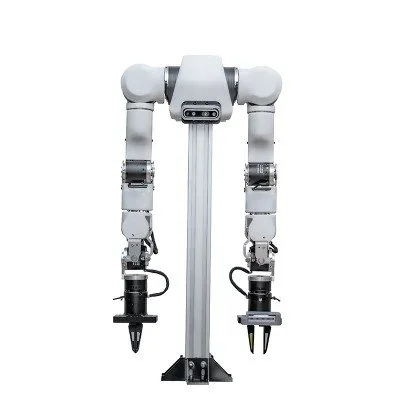
A person drives the robot through the task and everything is recorded on the robot itself, so the data matches the deployment embodiment exactly. ALOHA showed that a low-cost bimanual leader-follower setup and the ACT policy reach 80–90% success on six fine-grained real-world tasks from 10 minutes of demonstrations.11 Mobile ALOHA extended this to whole-body mobile manipulation with 50 demonstrations per task.15 Our State of Robot Teleoperation report covers the interfaces in depth. In our catalog, leader-follower hardware includes the RC Aloha Leader$2,500.00, the RC OpenArm V1 Leader$6,500.00 and the RC Mobile Aloha$20,000.00, all RC-branded and our own products.
Egocentric human video
Head-mounted cameras record people doing everyday tasks, which gives far broader coverage of objects, scenes and strategies than any single robot lab can stage. Ego4D recorded 3,670 hours of daily-life video from 931 camera wearers in 74 locations across 9 countries.3 EgoDex focused on dexterity, with 829 hours of egocentric video and hand tracking collected on Apple Vision Pro across 194 tabletop tasks.5 Our State of Egocentric Data Collection report compares the capture devices, including the RC E1 Egocentric SystemRequest a Quote and the RC E1 Ego Camera SetRequest a Quote (our own products).
UMI and handheld grippers
A handheld gripper with a wrist camera lets a person record demonstrations anywhere, then train a policy that runs on a robot with the same gripper geometry. The UMI authors describe the resulting policies as hardware-agnostic and deployable on multiple robot platforms, with latency matching at inference time.6 Our RC UMI$1,250.00 and RC Dex-UMI$9,800.00 are our own products in this family; ALOHA vs UMI explains when each approach fits.
Motion capture and gloves
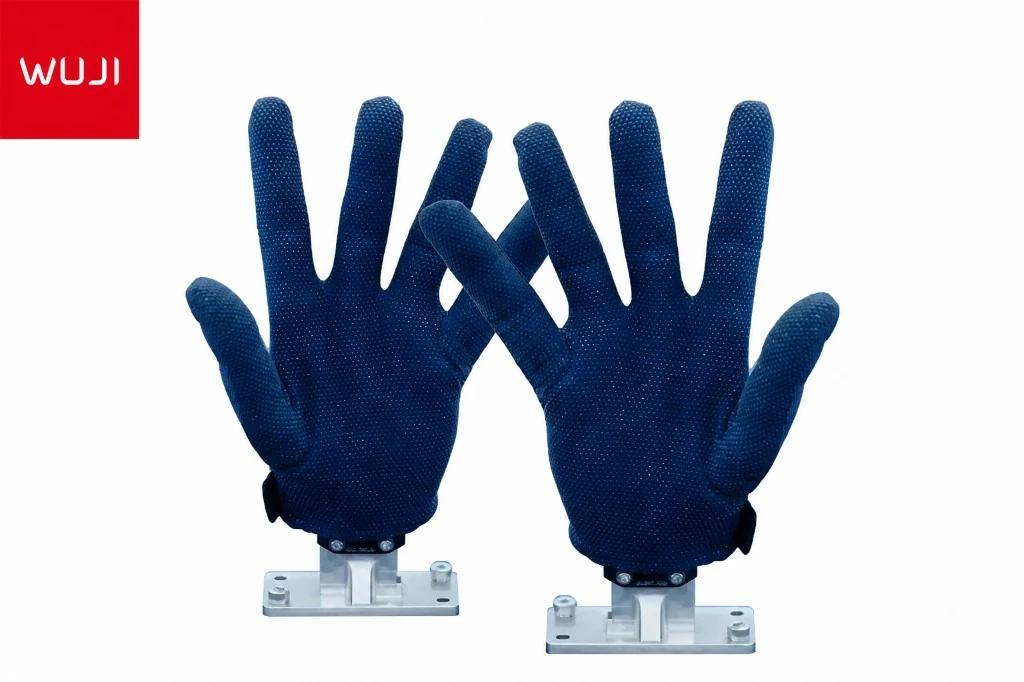
Gloves and mocap record what cameras struggle to see: finger joints under occlusion, contact and whole-body posture. DexCap combined SLAM with electromagnetic sensing for portable hand and wrist tracking and learned dexterous skills directly from the recorded human motion.7 HOT3D adds a benchmark for 3D hand and object tracking from egocentric multi-view video, with more than 3.7 million images from 19 subjects handling 33 objects.13 The RC G1 Tactile Glove$3,625.00 is our own tactile glove; the State of Dexterous Hands report covers the hand side.
Simulation and synthetic data
Simulators produce unlimited variation with perfect labels, and synthetic generation multiplies scarce human demonstrations. MimicGen generated more than 50,000 demonstrations across 18 tasks from about 200 human demonstrations.8 Simulation also earns its place in evaluation: SIMPLER reported a strong correlation between policy performance in its simulated environments and in the real world.14 Our article on why real-world data still matters alongside simulation discusses the balance.
World-model and video pretraining data
The newest layer is pretraining on large video corpora before any robot data is used. V-JEPA 2 was pretrained on more than 1 million hours of internet video, then post-trained into an action-conditioned world model with less than 62 hours of unlabeled robot video from DROID.9 Generalist vision-language-action models such as π₀ train on data from many robot platforms, including single-arm, dual-arm and mobile manipulators.16 For these models, robot demonstrations become the fine-tuning layer on top of broad video priors. Robot learning from video covers the methods.
The open dataset landscape
These are the public datasets most teams reference in 2026. Scale figures are as stated by each dataset's authors.
| Dataset | Type | Published scale | Where it stands out |
|---|---|---|---|
| Open X-Embodiment | Pooled robot demonstrations | 1M+ real robot trajectories, 22 embodiments, 21 institutions, 527 skills117 | Cross-embodiment training at scale |
| DROID | Teleoperation, in the wild | 76k trajectories, 350 hours, 564 scenes, 84 tasks, 50 collectors over 12 months12 | Scene diversity on one robot platform |
| BridgeData V2 | Teleoperation, low-cost arm | 60,096 trajectories in 24 environments18 | Language-conditioned tabletop skills |
| AgiBot World | Robot manipulation demonstrations | Over 1 million trajectories, 217 tasks, five deployment scenarios2 | Large-scale real-world manipulation |
| Ego4D | Egocentric human video | 3,670 hours, 931 camera wearers, 74 locations, 9 countries3 | Breadth of everyday activity |
| Ego-Exo4D | Egocentric + exocentric video | 1,286 hours, 740 participants, 123 scenes, 13 cities4 | Skilled activity seen from both views |
| EgoDex | Egocentric dexterous video | 829 hours, 194 tabletop tasks, Apple Vision Pro capture5 | Hand pose for dexterous manipulation |
| HOT3D | Egocentric hand-object tracking | 3.7M+ images, 833+ minutes, 19 subjects, 33 objects13 | 3D hand and object ground truth |
| LeRobot hub | Dataset hub and format | Standardized LeRobotDataset format on the Hugging Face Hub19 | One loader for many community datasets |
Access terms differ. Ego4D, for example, requires accepting a license agreement before download,20 while many robot datasets ship under permissive licenses. Check the license on each dataset's own page before training a commercial model. For head-to-heads, see Open X-Embodiment vs DROID, BridgeData vs robomimic and LIBERO vs CALVIN.
Formats, tooling and quality practice
Four formats cover most work
| Format | What it is | Common home |
|---|---|---|
| LeRobotDataset (v3.0) | Parquet tables for states, actions and timestamps; MP4 video sharded per camera; JSON/Parquet metadata for schema and episode boundaries21 | Hugging Face LeRobot training and the Hub19 |
| RLDS | An ecosystem to record, replay, label and share sequential decision-making data22 | TensorFlow pipelines; Open X-Embodiment-style data |
| HDF5 | A self-describing file format for n-dimensional datasets and their metadata in one file23 | robomimic (one HDF5 file per dataset, one group per demo)24, ACT/ALOHA |
| MCAP | An open container format for timestamped, multimodal log data; the default log format in ROS 225 | Raw robot logs before conversion to a training format |
A practical pattern: log raw sessions in MCAP or the robot's native format, convert to HDF5, RLDS or LeRobot for training, and keep the conversion scripted so it can be re-run. Our HDF5 vs RLDS vs LeRobot guide and the format comparison go deeper.
Quality, annotation and evaluation
- Timing first. Cameras, joint states and actions need one clock; a policy cannot learn from misaligned streams. Our published timing targets are listed under "Our data" below.
- Episode checks. Task success, frame loss, schema consistency, joint limits and metadata completeness should be checked per episode, before training, not after a failed run. Our demonstration data quality checklist and teleoperation data quality checklist give working lists.
- Annotation. Task phases, subtask boundaries, language instructions and success labels make the same episodes useful for VLA training and for filtering. See robot data annotation.
- Plan for diversity. The 2024 scaling study collected over 40,000 demonstrations and found generalization follows a roughly power-law relationship with the number of environments and objects; past a point, more demonstrations per environment add little.10
- Evaluate repeatably. Real-robot evaluation is slow, so teams add simulated evaluation that correlates with real performance, as SIMPLER reported.14
Cost and scaling: what has been published
Few organizations publish what their data cost. These are figures their authors made public:
| Published figure | Source |
|---|---|
| ALOHA: a bimanual teleoperation system on a budget of about $20k | ALOHA project page26 |
| GELLO: parts for the leader-arm controller cost less than $300 | GELLO project page27 |
| DROID: 76k trajectories took 50 data collectors 12 months | DROID paper12 |
| Four collectors in one afternoon gathered enough diverse data for two tasks to reach about 90% success in new environments with unseen objects | Data scaling laws paper10 |
| About 200 human demonstrations were expanded into more than 50,000 synthetic demonstrations | MimicGen paper8 |
| Less than 62 hours of robot video post-trained a world model pretrained on more than 1 million hours of internet video | V-JEPA 2 paper9 |
Read together, they point one way: hardware for collection has become inexpensive, and the expensive part is people's time. That is why diversity per hour, synthetic multiplication and video pretraining matter so much. For a line-by-line budget, see robot data collection cost and the cost breakdown. Our own pilot and campaign pricing is published on the teleoperation data collection service page; we do not restate it here so the two pages cannot drift apart. Running more operators brings its own quality curve, covered in scaling robot data collection teams.
Our data
This section only re-aggregates what is already public on roboticscenter.ai.
Our public dataset catalog
Our /datasets catalog is a reference guide to public robot learning datasets. Snapshot of November 11, 2026:
| Catalog entries | Count |
|---|---|
| Dataset pages | 29 |
| Distinct datasets and hubs they cover (three have both an overview and a download page) | 26 |
| Guides and comparisons | 17 |
| Custom collection page | 1 |
| Total entries | 47 |
Distinct datasets in our catalog, by data type (Nov 11, 2026; 26 datasets)
| Data type (26 distinct datasets) | Count | Examples in the catalog |
|---|---|---|
| Robot teleoperation demonstrations | 8 | ALOHA, DROID, BridgeData V2, RH20T |
| Simulation and synthetic | 8 | LIBERO, robomimic, MimicGen, RoboCasa |
| Human video | 3 | Ego4D, EPIC-KITCHENS, Assembly101 |
| Human motion capture | 3 | AMASS, CMU MoCap, HumanML3D |
| Tactile | 2 | GelSight, Touch and Go |
| Robot interaction video | 1 | RoboNet |
| Dataset hub | 1 | LeRobot |
Among the 10 datasets of robot data (demonstrations, interaction video and the hub), 4 span multiple embodiments, 2 are bimanual arms, 2 are single arms and 2 are humanoids.
| License tier (26 distinct datasets) | Count |
|---|---|
| Open or free (MIT, Apache, BSD and similar) | 13 |
| Attribution (CC-BY) | 1 |
| Non-commercial | 5 |
| Research or custom terms | 2 |
| Not yet labeled in our catalog | 5 |
What our data services deliver
Our public data services pages describe how we collect and deliver data for customers:
- Delivery formats: HDF5 (ACT, ALOHA, robomimic), RLDS/TFRecord (Open X-Embodiment, Octo), LeRobot Parquet (Hugging Face), or a custom schema, validated against the schema before handoff (teleoperation data collection).
- Timing targets, reported on the delivered episodes: camera-action sync under 5 ms, cross-camera skew under 1 ms, frame drop rate under 0.1%, jitter under 2 ms (σ), clock drift under 0.5 ms per hour.
- A 10-point episode checklist: synchronized timestamps, consistent episode structure, operator qualification, task success verification, scene reset consistency, frame drop monitoring, gripper state consistency, joint limit compliance, metadata completeness and annotation standards.
- Annotation: frame-level labels, task segmentation, per-episode quality scoring and language labels (annotation service).
- Collection methods for hands: glove teleoperation, VR arm-and-hand teleoperation, egocentric capture and UMI workflows (dexterous hand data).
- Ownership: data collected under contract belongs to the client and is not reused or published.
Demand for this work is visible in our inquiries. Our teleoperation report found that 52 of 381 buyer inquiries (14%) received through the website between September 21 and November 11, 2026 asked about a data collection service (details and method).
Demo clips already on our site
VR arm-and-hand teleoperation: VR tracks the arm while a glove drives the fingers. More clips, including first-person task captures and UMI-style tabletop demonstrations, are on our dexterous hand data page.
How to plan a robot data strategy
Start from the policy you want to train and where it will run, then choose the data mix:
- If you need a policy on a specific robot soon, collect teleoperation demonstrations on that robot, and spend operator hours on more scenes and objects rather than repeats.10 Start with ALOHA vs UMI and our State of Robot Teleoperation.
- If you need broad task coverage or human strategies, add egocentric human video or handheld UMI data; see State of Egocentric Data Collection.
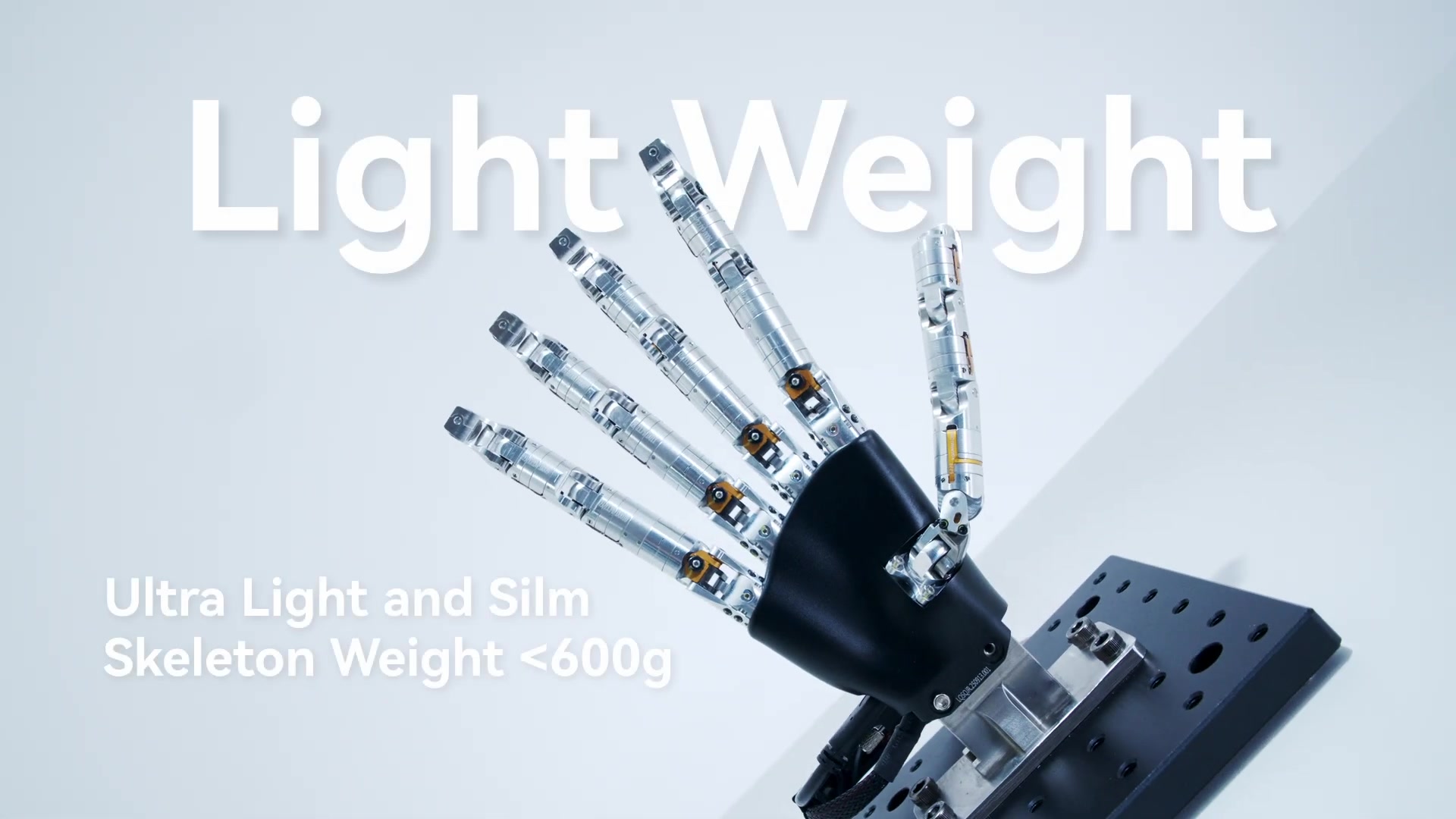
- If finger-level dexterity matters, pair gloves or mocap with a dexterous hand; see State of Dexterous Hands.
- If you need variation, labels or repeatable evaluation cheaply, add simulation and synthetic generation, and keep a real-world test set.
- If you are building a generalist model, start from public datasets in the datasets catalog and from video-pretrained models, then fine-tune with your own robot data.
- If you would rather buy than build, compare tools in robot data platforms, read build vs buy robot training data, and see our data services.
Before you collect, settle three things: the delivery format your training code reads, the quality checks an episode must pass, and how the data will be stored and secured; robot data privacy and security for enterprise covers the last one.
The robot data library
Market and strategy
- The future of the robot data market
- Build vs buy robot training data
- Robot data collection guide
- Robot data platforms compared
Collecting
- Robot data collection cost
- Scaling robot data collection teams
- ALOHA vs UMI data collection
- Robot data privacy and security for enterprise
Preparing and using
- Robot data annotation
- HDF5 vs RLDS vs LeRobot
- Robot demonstration data quality checklist
- Robot learning from video
Yearly reports
How we built this report
- Dataset catalog statistics count the public pages of our /datasets collection on November 11, 2026, using its compiled index and the category and license facets that the catalog page shows. Data type and embodiment are our own editorial classification of each dataset, made for this report. Pages that cover the same dataset twice (an overview and a download page) count once in the per-dataset tables.
- Data services facts are copied from our public data services pages as they stood on the same date.
- The inquiry figure is quoted from our State of Robot Teleoperation report, which describes its method. No new inquiry data was read for this page.
- Third-party figures are cited to the paper or official page below, as stated by their authors. Nothing in "Our data" is a lab measurement.
Disclosure: Robotics Center sells the products shown with store links on this page, and the RC-branded products are our own products.
Sources
- Open X-Embodiment Collaboration. "Open X-Embodiment: Robotic Learning Datasets and RT-X Models", arXiv:2310.08864, 2023. https://arxiv.org/abs/2310.08864 (accessed 2026-11). ↩
- AgiBot World Colosseo team. "AgiBot World Colosseo: A Large-scale Manipulation Platform for Scalable and Intelligent Embodied Systems", arXiv:2503.06669, 2025. https://arxiv.org/abs/2503.06669 (accessed 2026-11). ↩
- Grauman et al. "Ego4D: Around the World in 3,000 Hours of Egocentric Video", arXiv:2110.07058, 2021. https://arxiv.org/abs/2110.07058 (accessed 2026-11). ↩
- Grauman et al. "Ego-Exo4D: Understanding Skilled Human Activity from First- and Third-Person Perspectives", arXiv:2311.18259, 2023. https://arxiv.org/abs/2311.18259 (accessed 2026-11). ↩
- Hoque et al. "EgoDex: Learning Dexterous Manipulation from Large-Scale Egocentric Video", arXiv:2505.11709, 2025. https://arxiv.org/abs/2505.11709 (accessed 2026-11). ↩
- Chi, Xu et al. "Universal Manipulation Interface: In-The-Wild Robot Teaching Without In-The-Wild Robots", arXiv:2402.10329, 2024. https://arxiv.org/abs/2402.10329 (accessed 2026-11). ↩
- Wang et al. "DexCap: Scalable and Portable Mocap Data Collection System for Dexterous Manipulation", arXiv:2403.07788, 2024. https://arxiv.org/abs/2403.07788 (accessed 2026-11). ↩
- Mandlekar et al. "MimicGen: A Data Generation System for Scalable Robot Learning using Human Demonstrations", arXiv:2310.17596, 2023. https://arxiv.org/abs/2310.17596 (accessed 2026-11). ↩
- Assran et al. "V-JEPA 2: Self-Supervised Video Models Enable Understanding, Prediction and Planning", arXiv:2506.09985, 2025. https://arxiv.org/abs/2506.09985 (accessed 2026-11). ↩
- Lin et al. "Data Scaling Laws in Imitation Learning for Robotic Manipulation", arXiv:2410.18647, 2024. https://arxiv.org/abs/2410.18647 (accessed 2026-11). ↩
- Zhao, Kumar, Levine, Finn. "Learning Fine-Grained Bimanual Manipulation with Low-Cost Hardware", arXiv:2304.13705, 2023. https://arxiv.org/abs/2304.13705 (accessed 2026-11). ↩
- Khazatsky et al. "DROID: A Large-Scale In-The-Wild Robot Manipulation Dataset", arXiv:2403.12945, 2024. https://arxiv.org/abs/2403.12945 (accessed 2026-11). ↩
- Banerjee et al. "HOT3D: Hand and Object Tracking in 3D from Egocentric Multi-View Videos", arXiv:2411.19167, 2024. https://arxiv.org/abs/2411.19167 (accessed 2026-11). ↩
- Li et al. "Evaluating Real-World Robot Manipulation Policies in Simulation" (SIMPLER), arXiv:2405.05941, 2024. https://arxiv.org/abs/2405.05941 (accessed 2026-11). ↩
- Fu, Zhao, Finn. "Mobile ALOHA: Learning Bimanual Mobile Manipulation with Low-Cost Whole-Body Teleoperation", arXiv:2401.02117, 2024. https://arxiv.org/abs/2401.02117 (accessed 2026-11). ↩
- Black et al. "π₀: A Vision-Language-Action Flow Model for General Robot Control", arXiv:2410.24164, 2024. https://arxiv.org/abs/2410.24164 (accessed 2026-11). ↩
- Open X-Embodiment project page. https://robotics-transformer-x.github.io/ (accessed 2026-11). ↩
- Walke et al. "BridgeData V2: A Dataset for Robot Learning at Scale", arXiv:2308.12952, 2023. https://arxiv.org/abs/2308.12952 (accessed 2026-11). ↩
- Hugging Face. LeRobot (GitHub repository). https://github.com/huggingface/lerobot (accessed 2026-11). ↩
- Ego4D. Official dataset site (license and access). https://ego4d-data.org/ (accessed 2026-11). ↩
- Hugging Face. "LeRobotDataset v3.0", LeRobot documentation. https://huggingface.co/docs/lerobot/lerobot-dataset-v3 (accessed 2026-11). ↩
- Ramos et al. "RLDS: an Ecosystem to Generate, Share and Use Datasets in Reinforcement Learning", arXiv:2111.02767, 2021. https://arxiv.org/abs/2111.02767 (accessed 2026-11). ↩
- The HDF Group. HDF5. https://www.hdfgroup.org/solutions/hdf5/ (accessed 2026-11). ↩
- robomimic documentation. "Datasets overview". https://robomimic.github.io/docs/datasets/overview.html (accessed 2026-11). ↩
- MCAP. Official site. https://mcap.dev/ (accessed 2026-11). ↩
- ALOHA project page. https://tonyzhaozh.github.io/aloha/ (accessed 2026-11). ↩
- GELLO project page. https://wuphilipp.github.io/gello_site/ (accessed 2026-11). ↩
Free download
Get State of Robot Data 2026 as a PDF
The full report in one file, with the catalog and inquiry data tables and every source, to read offline or share with your team. Leave your name and work email and the download starts right away.