

Egocentric Data Collection Devices 2026: Head-Mounted Rigs, UMI Grippers and Multimodal Kits Compared
A sourced comparison of egocentric and UMI-style data collection devices for robot learning in 2026: head-mounted camera rigs, handheld grippers and multimodal tactile kits, with a guide to choosing by task, hand visibility, sensing, data format and budget.
Teams training robot manipulation policies no longer need a robot in the room for every demonstration. Two families of devices let people record the task directly: camera rigs worn on the head, which capture what the person sees and does with their hands, and handheld grippers that mirror a robot's end effector, following the pattern introduced by the Universal Manipulation Interface (UMI).1 A third group combines both views with tactile or motion-capture inputs on one clock. This page sets out the published specifications of the devices in each group side by side, explains what each one is built for, and ends with a short guide to choosing.
Disclosure: Robotics Center sells every device with a product card on this page. The RC E1 Egocentric System, the RC E1 Ego Camera Set, RC Dex-UMI and RC UMI are our own products and are labelled "our product" wherever they appear. Within each table, devices are listed alphabetically by brand; the order is not a ranking. Every third-party specification links to the maker's own page, and anything a maker does not publish is left blank rather than estimated. To filter these devices by spec, use the egocentric comparison tool.
The three device types at a glance
| Type | What it records | Best suited to |
|---|---|---|
| Head-mounted egocentric rig | First-person video of both hands and the scene, usually with an IMU and head trajectory | Large volumes of natural human task video, hand and object motion, learning from human video |
| Handheld UMI-style gripper | Wrist-camera video plus the gripper's 6D trajectory and opening width | Policies for a parallel-jaw robot gripper, where trajectories should transfer directly |
| Multimodal or tactile kit | Egocentric and wrist views together, often with tactile, glove or gripper-angle streams | Contact-rich tasks (insertion, deformables, in-hand work) and multi-view datasets |
Head-mounted egocentric rigs
A head-worn rig records what the person sees. Wide or stitched fields of view keep both hands in frame, and an IMU or visual SLAM records head motion. These rigs suit teams collecting many hours of household, retail or factory task video where the goal is hand and object motion rather than a robot's exact gripper state. The table covers the GenRobot DAS Ego Multimodal Data Collection HeadsetRequest a Quote, the GI Labs EGO1GS Global Shutter Egocentric HeadsetRequest a Quote, the Maniformer MEgo View Egocentric Data Collection HeadsetRequest a Quote and the Orbbec EGO Robot-Free Data Collection HeadsetRequest a Quote.
| Specification | GenRobot DAS Ego | GI Labs EGO1GS | Maniformer MEgo View | Orbbec EGO series |
|---|---|---|---|---|
| Cameras | 6 RGB, global shutter2 | Stereo pair, global shutter, 63 mm baseline3 | Head: 3 fisheye + 1 stereo; plus 2 wide-angle wrist cameras4 | Stereo (EGO-2), four fisheye (EGO-4B) or three fisheye plus depth (EGO-D3B)5 |
| Field of view | Over 270° horizontal, 150° vertical2 | 157° × 84° per camera3 | 300°+ panoramic head view4 | Up to H 165° / V 130° per camera; about 280° stitched on EGO-4B5 |
| Video | 1600 × 1300 at 30 Hz2 | 1080p at 30 fps, H.265 on device3 | 2 MP at 60 fps, global shutter4 | Up to 1920 × 1200 at 30 fps; 1600 × 1200 at 60 fps on EGO-4B5 |
| Motion sensing | 6-axis IMU at 200 Hz2 | 9-DoF IMU at 400 Hz3 | Automotive-grade 9-axis IMU at 1000 Hz4 | 6- or 9-axis IMU up to 1000 Hz; image-IMU sync within 1 ms5 |
| Weight | 350 g2 | About 200 g, headset only3 | Under 120 g (EGO-2, 63 mm baseline)5 | |
| Power | Swappable magnetic battery for 24-hour continuous operation2 | Runs from a USB power bank; runtime scales with capacity3 | 2 hours, quick-change battery4 | About 20 hours on a 10,000 mAh power bank (EGO-2, 63 mm)5 |
| Output | RGB, IMU, trajectory and audio; multi-device alignment under 1 ms2 | One time-aligned .mcap file per session3 | 7-camera RGB, depth, IMU, trajectory, audio and skeleton tracking4 | MP4 and MCAP via Orbbec's Ego Viewer5 |
| Price | Quote | Quote | Quote | Quote |
What each one does well:
- GenRobot DAS Ego covers more than 270° horizontally with six global-shutter cameras, and battery swapping supports all-day collection shifts.2 It suits large collection operations recording full scenes.
- GI Labs EGO1GS is a light stereo headset with a 63 mm baseline matched to human eye spacing, on-device hand detection, and all streams written to a single MCAP file on one hardware clock.3 It suits teams that want stereo depth cues and a simple file-per-session workflow.
- Maniformer MEgo View pairs a panoramic head view with two wrist cameras and records human pose with skeleton tracking at a 1000 Hz IMU rate.4 It suits teams that want head and wrist views of the same demonstration from one system.
- Orbbec EGO is a family rather than one device: a light stereo headset, a four-fisheye panoramic model and a depth model built around Orbbec's own depth camera, all with sub-millisecond image-IMU sync.5 It suits teams that want to choose stereo, panoramic or depth capture from one maker.
Also in this group in our store: the AgileX PiKA Ego-HRequest a Quote, the first-person member of AgileX's Pika line, which AgileX describes as combining UMI-based manipulation capture with first-person egocentric sensing;6 and two Lumos devices, the Lumos Ego LiteRequest a Quote head-mounted unit and the Lumos FastUMI GoRequest a Quote backpack unit. Lumos is known for its backpack-mounted FastUMI Pro collection workstation, and has said it plans to deploy 10,000 units in 2026 across homes, offices, hotels, restaurants, malls and industrial sites.7 We have not found an official Lumos specification page for the Ego Lite or FastUMI Go, so we do not list figures for them here; ask us for the current datasheet.
Our own head-mounted options are the RC E1 Egocentric SystemRequest a Quote (our product), a modular first-person capture rig configured per project and sold on quote, and the RC E1 Ego Camera SetRequest a Quote (our product), an egocentric camera kit that is also configured and sold on quote.
Handheld UMI-style grippers
A handheld gripper with a wrist camera records what a robot gripper would see and do, so the data maps directly onto a parallel-jaw robot. The UMI paper showed that policies learned this way can be "hardware-agnostic and deployable across multiple robot platforms";1 FastUMI later reworked the hardware around a decoupled design and an off-the-shelf tracking module, and released over 10,000 demonstrations across 22 everyday tasks.8 These devices suit teams training policies for a specific gripper who want precise end-effector trajectories. The table covers the AgileX PiKA Data Gripper KitFrom $5,949.96, the Maniformer MEgo Gripper Handheld Data Collection GripperRequest a Quote and the Orbbec UMI Handheld Manipulation InterfaceRequest a Quote, plus our own RC UMI.
| Specification | AgileX PiKA (Sense + Station) | Maniformer MEgo Gripper | Orbbec UMI F-3 | RC UMI (our product) |
|---|---|---|---|---|
| Wrist vision | RGB and depth up to 1280 × 720 at 90 fps6 | Triple-camera RGB, 200° fisheye, 2 MP at 60 fps, global shutter4 | 2 MP fisheye RGB (H 165° / V 130°) plus 1.2 MP global-shutter SLAM camera, 30 or 60 fps5 | GoPro Hero 9 with Max Lens Mod 1.09 |
| Tracking | Up to ±1.5 mm, pose output up to 120 Hz, using the PiKA Station base6 | Millimetre-precision spatial positioning; 9-axis IMU at 1000 Hz4 | 6-axis IMU plus magnetometer; image-IMU sync under 1 ms5 | 6-DOF from the camera's visual-inertial SLAM; ArUco tags measure gripper width9 |
| Gripper | Two-finger, 2 kg maximum force6 | Two-finger; quick-change 3D tactile fingers optional4 | 130° opening angle5 | Parallel-jaw, open-source UMI reference design9 |
| Weight | 448 g (PiKA Sense)6 | 540 g standard, 587 g Ultra4 | About 1.2 kg with camera9 | |
| Runtime | 9 hours (Sense); 30 hours (Station)6 | 2.5 hours, quick-change battery4 | ||
| Software | ROS 1 and ROS 2 drivers, URDF and examples6 | Local storage plus cloud upload4 | MP4 and MCAP via Ego Viewer5 | Official UMI codebase (Diffusion Policy); LeRobot and ACT ready9 |
| Price | From $5,949.96 (kit) | Quote | Quote | $1,250.00 |
What each one does well:
- AgileX PiKA publishes both its tracking accuracy and its pose output rate, and ships ROS 1 and ROS 2 support, with official support for AgileX PiPER arms and selected third-party arms such as UFactory xArm Lite 6 and Universal Robots.6 It suits labs that want to collect with a handheld unit and replay on an arm they already own.
- Maniformer MEgo Gripper adds optional tactile fingers with 1.6 mm spatial and 0.05 N force resolution, and records gripper angle and opening distance alongside three camera views.4 It suits teams that want contact data from a handheld gripper.
- Orbbec UMI F-3 pairs a wide fisheye camera with a dedicated global-shutter SLAM camera for tracking, and shares Orbbec's MP4 and MCAP tooling with the EGO headsets.5 It suits teams that want headset and gripper capture from one maker.
- RC UMI$1,250.00 (our product) is built to the open-source UMI reference design with the GoPro the design specifies, so it runs the official UMI codebase as published.9 It suits teams that want to reproduce published UMI results with the reference hardware.
For multi-finger hands rather than parallel-jaw grippers, RC Dex-UMI$9,800.00 (our product) is a dexterous-hand UMI system with a LEAP-hand-compatible end effector and wrist cameras ($9,800.00). The research behind this approach is DexUMI, which uses a wearable hand exoskeleton to turn human hand motion into motion a robot hand can perform, and reported an 86% average task success rate across two dexterous robot hands.10
Multimodal and tactile kits
Kits in this group record several views of the same demonstration, and some add contact signals a camera cannot see. IO-AI Tech SenseXperience$2,799.00 is a configurable system whose baseline includes an egocentric unit, wrist unit, gripper unit and compute unit; motion-capture and tactile gloves are available as options, and data exports in formats including LeRobot, HDF5 and MCAP ($2,799.00).11 It suits teams that want egocentric, wrist and gripper data in a LeRobot-ready format from one kit.
The Maniformer MEgo View and MEgo Gripper also work as a pair, with sub-millisecond wireless time synchronisation across devices.4
Reference device: Meta Project Aria
Project Aria is Meta Reality Labs Research's egocentric, multi-modal recording device, built "to foster and accelerate research" in first-person AI.12 The current Aria Gen 2 glasses carry four SLAM cameras, an RGB camera, two eye-tracking cameras, an IMU, microphones, GNSS and PPG sensors, and researchers obtain them by applying for the Aria Research Kit.13 We do not sell Aria. It is included because many egocentric datasets and papers use it, so it is a useful reference point for sensor coverage.
How to choose
- Start from the task. For many hours of natural human activity, choose a head-mounted rig. For policies that must run on a parallel-jaw gripper, choose a handheld UMI-style gripper. For contact-rich work, choose a kit with tactile sensing.
- Check hand visibility. Hands leave a narrow field of view during reaching and bimanual work. Compare horizontal and vertical field of view, and whether the rig stitches several cameras (GenRobot DAS Ego, Orbbec EGO-4B, MEgo View) or uses one stereo pair (GI Labs EGO1GS, Orbbec EGO-2).
- Wrist camera or gripper. A wrist camera on a head rig (MEgo View) adds a close-up of the hands. A handheld gripper (PiKA, MEgo Gripper, Orbbec UMI, RC UMI) also records gripper width, which a robot gripper can reproduce directly.
- Decide whether you need touch. If force or contact matters, look at the MEgo Gripper's tactile fingers or SenseXperience's tactile glove option.
- Confirm the data format. If you train with LeRobot, check that the device exports LeRobot or a format you can convert. SenseXperience lists LeRobot export,11 GI Labs and Orbbec write MCAP,35 and RC UMI runs the UMI codebase and is LeRobot ready.9 Robot Data Formats Compared explains the trade-offs between HDF5, RLDS and LeRobot.
- Set the budget. The AgileX PiKA kit, RC UMI, RC Dex-UMI and SenseXperience show live prices on their product cards; the other devices here are configured and quoted per project. If you need many units, ask for a quote either way.
If you need X, choose A:
- Panoramic, full-scene capture from one headset: GenRobot DAS Ego, Maniformer MEgo View or Orbbec EGO-4B.
- Light stereo headset with a single-file workflow: GI Labs EGO1GS or Orbbec EGO-2.
- Head and wrist views from one system: Maniformer MEgo View.
- Parallel-jaw trajectories with published tracking accuracy and ROS support: AgileX PiKA.
- Handheld capture with touch: Maniformer MEgo Gripper with tactile fingers.
- Reproducing the original UMI setup: RC UMI (our product).
- Multi-finger hand data: RC Dex-UMI (our product).
- Egocentric, wrist and gripper data exported as LeRobot: SenseXperience.
Buying the hardware or buying the data
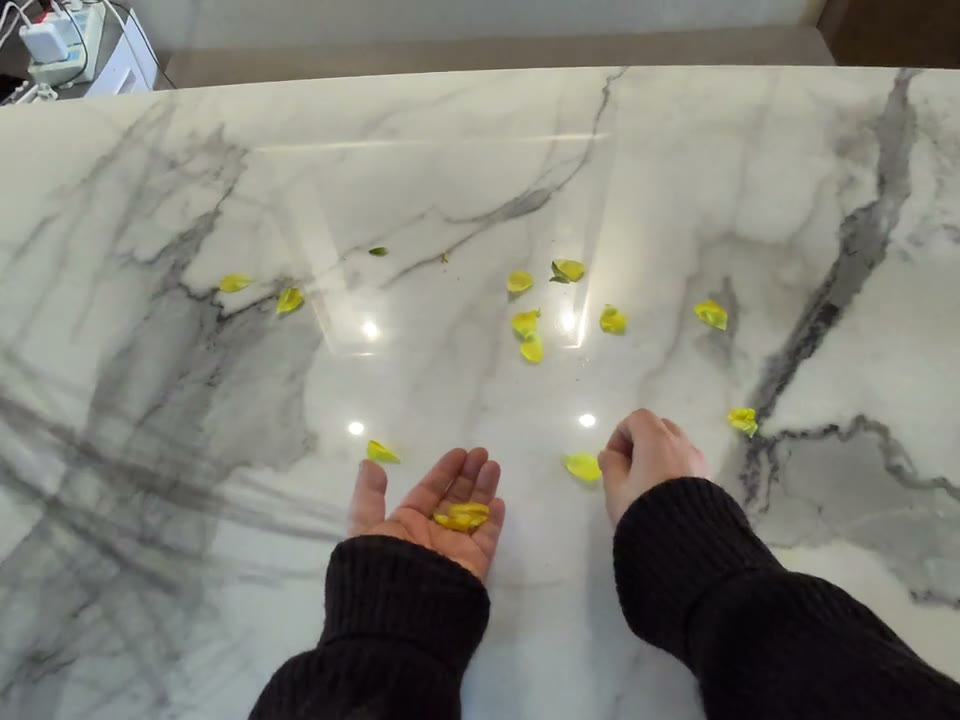
Some teams would rather receive a finished dataset than run a collection team. We collect egocentric demonstration data for customers with two setups, a head camera with a tactile glove (egocentric video, hand pose, tactile signals and task labels) and a head camera on its own (egocentric video, timestamps, session metadata and task labels). Our dexterous hand data page shows eleven first-person sample clips from these collection runs, including book sorting, carrot preparation, floor sweeping and garment folding. Each delivery goes through checks for completion and label consistency, timestamp and stream alignment, frame loss and missing signals, and schema, calibration and metadata, and ships as HDF5, RLDS/TFRecord, LeRobot/Parquet or an agreed custom schema.
Related reading
- Egocentric comparison tool: filter these devices by camera, IMU, weight and price
- ALOHA vs UMI: teleoperation compared with handheld capture
- AgileX PiKA data collection guide: setting up a PiKA system
- Robot learning from video: how policies learn from human footage
- Data collection hardware: the full store category
Sources
- Chi et al., "Universal Manipulation Interface: In-The-Wild Robot Teaching Without In-The-Wild Robots," arXiv:2402.10329, https://arxiv.org/abs/2402.10329 (accessed 2026-11). ↩
- GenRobot, "DAS Ego" product page, https://www.genrobot.ai/products/ego (accessed 2026-11). ↩
- General Intelligence Labs, "EGO1GS" product page, https://gilabs.xyz/products/ego1gs (accessed 2026-11). ↩
- Maniformer, "MEgo" product page (MEgo View and MEgo Gripper), https://www.maniformer.ai/en/mego (accessed 2026-11). ↩
- Orbbec, "Robot-free data collection" product page (EGO series and UMI F-3), https://www.orbbec.com.cn/xin/products/robot-free-data-collection/ (accessed 2026-11). ↩
- AgileX Robotics, "Pika Pro: Embodied AI Data Collection" product page, https://global.agilex.ai/products/pika-pro-embodied-ai-data-collection (accessed 2026-11). ↩
- KrASIA, "This company has built a backpack-style system for robotics data collection," 17 February 2026, https://kr-asia.com/this-company-has-built-a-backpack-style-system-for-robotics-data-collection (accessed 2026-11). ↩
- Zhaxizhuoma et al., "FastUMI: A Scalable and Hardware-Independent Universal Manipulation Interface with Dataset," arXiv:2409.19499, https://arxiv.org/abs/2409.19499 (accessed 2026-11). ↩
- Robotics Center, "RC UMI" product page (our product), https://www.roboticscenter.ai/store/product/svrc-umi (accessed 2026-11). ↩
- Xu et al., "DexUMI: Using Human Hand as the Universal Manipulation Interface for Dexterous Manipulation," arXiv:2505.21864, https://arxiv.org/abs/2505.21864 (accessed 2026-11). ↩
- "SenseXperience" product page, https://io-ai.tech/en/sensexperience/ (accessed 2026-11). ↩
- Engel et al., "Project Aria: A New Tool for Egocentric Multi-Modal AI Research," arXiv:2308.13561, https://arxiv.org/abs/2308.13561 (accessed 2026-11). ↩
- Meta, "Project Aria glasses" (Aria Gen 2 and the Aria Research Kit), https://www.projectaria.com/glasses/ (accessed 2026-11). ↩