


Dexterous Hand
LinkerBot O6 Specifications
Manufacturer figures from LinkerBot's O6 product page and its official SDKs. LinkerBot notes that figures vary with configuration and version, and that the delivered product takes precedence.
Hardware
Mechanical and Electrical
| Manufacturer | LinkerBot (LinkerHand) |
| Degrees of freedom | 6 active + 5 passive |
| Active joints (SDK order) | Thumb flexion, thumb abduction, index flexion, middle flexion, ring flexion, little-finger flexion |
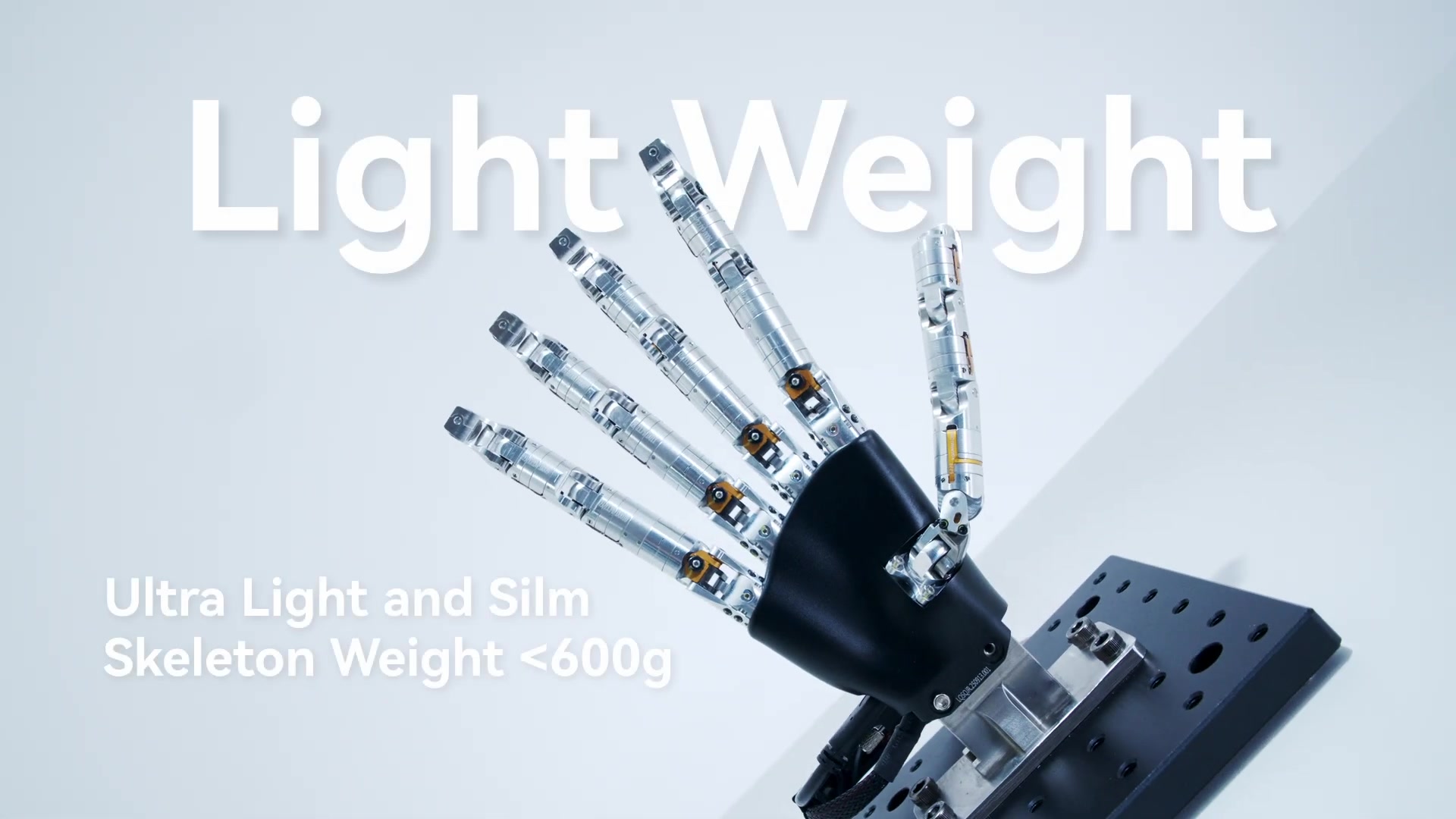
| Weight | 360 g |
| Maximum load | 50 kg |
| Fingertip force | Thumb 20 N; other fingers 25 N |
| Five-finger grip force | 70 N |
| Repeatability | < ±0.20 mm |
| Finger bend range | 1.61 rad (92.59°), four fingers |
| Joint speed | Four-finger bend 1.30 rad/s; thumb swing 1.36 rad/s; thumb bend 0.66 rad/s |
| Communication | CAN, CAN FD, RS485, EtherCAT |
| Operating voltage | 24-48 V |
| Transmission | Linkage drive |
| Tactile sensing | Optional |
| Material | Aerospace-grade aluminum alloy |
| Host software | LinkerBot host GUI for Windows and Ubuntu |
Interfaces
Control Interfaces in the Official SDKs
What LinkerBot's published SDKs document for the O6.
| CAN | Through a USB-to-CAN adapter at 1 Mbit/s (can0; a second hand on can1). Supported by the Python and ROS 2 SDKs. |
| RS485 | Modbus through a USB-to-RS485 adapter (usually /dev/ttyUSB*). Both SDKs list the O6 as supported. |
| ROS 2 topics | See the Software page for the driver's command, state and pressure topics. |
| URDF | O6 model in linkerhand-urdf |