







VR Teleoperation Companies Compared: Who's Leading in 2026?
Compare the leading VR teleoperation platforms for robot data collection — RCSV, Embodied Intelligence, Physical Intelligence, Dexterous, and open-source options.
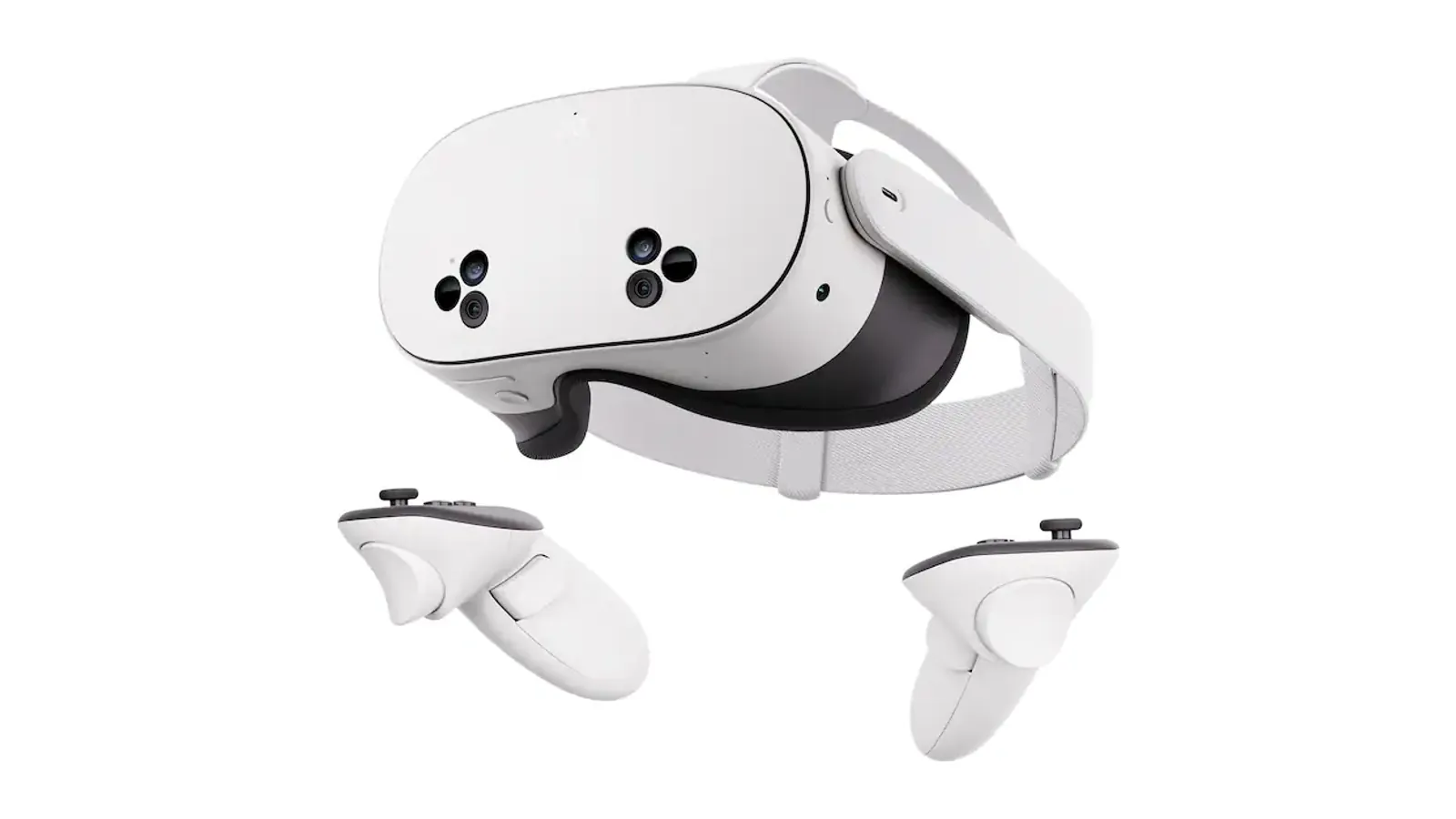
The market for VR-based robot teleoperation is maturing fast. Here is an honest comparison of every serious option for teams that need high-quality manipulation data.
Why VR Teleoperation Matters for Robot Learning
Training robots to manipulate objects requires demonstration data: recordings of a human performing the task that a learning algorithm can imitate. The quality and diversity of this data directly determines how well the resulting robot policy performs. VR teleoperation, where a human wearing a VR headset controls a robot arm in real time, has emerged as one of the highest-fidelity methods for collecting this data.
The core advantage of VR is intuitive spatial control. The operator sees what the robot sees (or a virtual overlay of the workspace) and moves their hands naturally. The headset tracks 6-DOF head pose and two 6-DOF hand poses at 90 Hz or higher. This maps naturally to controlling a robot arm's end-effector position and orientation in Cartesian space. Compared to keyboard/SpaceMouse control or even leader-follower arms, VR teleoperation offers faster operator onboarding, more natural motion trajectories, and the ability to teleoperate remotely.
The limitation is precision. VR controllers do not provide force feedback or proprioceptive sensing, so tasks requiring sub-millimeter precision (insertion, threading, delicate assembly) produce lower-quality demonstrations than physical leader arms. For everything else, including grasping, placing, sorting, cleaning, pouring, folding, and general manipulation, VR teleoperation produces data of sufficient quality for state-of-the-art imitation learning.
The 4 Teleoperation Approaches
Before comparing VR teleoperation companies, it helps to understand where VR fits among all teleoperation methods:
- VR headset (Quest 3, Vision Pro): Operator wears a headset and controls the robot via hand tracking or controllers. Lowest hardware cost ($500 headset), fastest operator onboarding (minutes), good data quality for most manipulation tasks. Latency: 15-40 ms end-to-end. Best for: general manipulation, remote teleoperation, scaling up data collection with non-expert operators.
- Leader-follower arms (ALOHA style): Operator holds a lightweight leader arm; a follower arm replicates the motion. Highest data quality due to direct kinematic mapping and proprioceptive feedback. Hardware cost: $15,000-$35,000 for a pair. Latency: 3-10 ms. Best for: precision tasks, bimanual coordination, tasks requiring force awareness.
- SpaceMouse/keyboard: Operator uses a 6-DOF SpaceMouse ($250) or keyboard to command end-effector velocities. Cheapest option. Very slow data collection (5-10x slower than VR). Produces unnatural trajectories. Best for: quick tests, very simple tasks, when no other option is available.
- Glove/exoskeleton: Operator wears haptic gloves that map finger motions to a dexterous robot hand. Highest DOF capture (20+ finger joints). Hardware cost: $8,000-$20,000. Best for: dexterous manipulation tasks requiring finger-level control.
VR wins for most teams because it balances data quality, collection speed, operator accessibility, and cost. Leader-follower wins for precision. Gloves win for dexterous hands. SpaceMouse is a last resort.
VR Teleoperation Platform Profiles
RCSV (Robotics Center)
What they offer: A managed VR teleoperation data collection service and an open-source teleoperation software stack. RCSV operates a fleet of robot arms (OpenArm, xArm, UR5e) paired with Meta Quest 3 headsets in their San Francisco and Allston facilities. Teams can either collect data on-site or have RCSV's trained operators collect data for them.
Hardware stack: Meta Quest 3 headset, OpenArm or xArm robot arm, Intel RealSense cameras, Ubuntu workstation. The teleoperation software runs on the workstation, receiving controller poses from the Quest 3 over WiFi and converting them to joint commands via inverse kinematics.
Data format: Episodes stored in HDF5 with joint positions, end-effector poses, camera images (wrist + overhead), gripper state, and timestamps. Compatible with ACT, Diffusion Policy, LeRobot, and RT-2 training pipelines. Conversion scripts provided for all major formats.
Pricing: Data collection service: $15-$40 per episode depending on task complexity and volume. Software stack: open-source (free). Hardware setup consulting: $3,000-$8,000. Monthly managed service: starting at $5,000/month for 500+ episodes.
Strengths: Transparent pricing, open-source software (you are not locked in), experienced operators for consistent data quality, multiple robot platforms supported, data delivered in your preferred format.
Limitations: Physical presence required for on-site collection (San Francisco or Allston). Remote teleoperation available but adds latency. Not suitable for tasks requiring sub-5ms latency.
Physical Intelligence (Pi)
What they offer: A foundation model for robot manipulation, trained on proprietary data collected internally. Physical Intelligence does not sell teleoperation services or tools to external teams. Their data collection infrastructure is internal and used exclusively to train their own models.
Relevance to buyers: If you want to use Pi's models, you work with them as an enterprise customer. You do not collect your own data through their platform. This is a fundamentally different business model than RCSV or open-source approaches.
Strengths: Massive internal dataset, well-funded team, strong research publications.
Limitations: Not accessible to most teams. Enterprise-only. No self-serve data collection. Proprietary models with limited customization.
Dexterous Robotics
What they offer: Glove-based teleoperation focused on dexterous manipulation tasks. Their system pairs haptic gloves with multi-finger robot hands for high-DOF data collection.
Hardware stack: Custom haptic gloves with finger tracking, paired with dexterous robot hands (Shadow, Inspire, or custom). VR headset used for visualization but primary control comes from the gloves.
Relevance to buyers: Dexterous is the best option if your specific task requires finger-level dexterity (in-hand manipulation, tool use with complex grip changes). For standard grasping and manipulation, VR controllers are sufficient and Dexterous's solution is overbuilt.
Pricing: Not publicly disclosed. Enterprise engagement model. Expect $50,000+ for a pilot program.
Strengths: Highest DOF capture for hand manipulation. Purpose-built for dexterous tasks.
Limitations: High cost. Narrow use case. Limited robot arm compatibility. Small community.
Open-Source Options (ACT/ALOHA, LeRobot, RoboAgent)
What they offer: Free, community-maintained software for robot teleoperation and data collection. These are not companies but open-source projects used by hundreds of research labs worldwide.
- ACT / ALOHA (Tony Zhao, Stanford/Google): The gold standard for leader-follower teleoperation and imitation learning. Primarily designed for leader arms, not VR. If you use ALOHA hardware, this is your software. Free.
- LeRobot (Hugging Face): Modular framework for robot learning that includes teleoperation utilities, data recording, and policy training. Supports VR input via community plugins. Growing rapidly. Free.
- RoboAgent / RoboHive: Research frameworks from university labs. Less polished but with strong academic backing. Free.
- AnyTeleop / Bunny-VisionPro: Community VR teleoperation packages that bridge Quest 3 or Vision Pro to robot control. Variable quality, active development. Free.
Strengths: Free. Fully customizable. Large community. No vendor lock-in. Cutting-edge research gets integrated quickly.
Limitations: Requires significant technical skill to set up and maintain. No guaranteed support. Quality varies across projects. Integration between components is your responsibility.
DIY Quest 3 Setup
What it is: A growing number of teams build their own VR teleoperation systems by combining a Meta Quest 3 ($500) with open-source IK solvers and a robot arm. This is the most cost-effective approach for teams with strong software engineering capabilities.
Typical stack: Quest 3 headset running a custom app (built with Meta's OpenXR SDK) that streams 6-DOF controller poses over WiFi to a Python server. The server runs inverse kinematics (via MoveIt2 or a custom IK solver) and sends joint commands to the arm. Total hardware cost: $500 (headset) + robot arm cost.
Strengths: Extremely affordable. Full control over the stack. Can be optimized for your specific robot and task.
Limitations: Requires 2-4 weeks of software engineering to build and debug. WiFi latency management is non-trivial. No support beyond community forums.
Comparison Table
| Platform | Cost | End-to-End Latency | DOF Captured | Data Format | API / Self-Serve | Best For |
|---|---|---|---|---|---|---|
| RCSV | $15-40/episode or $5K/mo managed | 20-35 ms | 6-DOF arm + gripper | HDF5, LeRobot, RLDS | Yes (open-source stack) | Teams wanting quality data without building infrastructure |
| Physical Intelligence | Enterprise pricing (undisclosed) | N/A (internal) | Proprietary | Proprietary | No | Enterprise customers using Pi models |
| Dexterous Robotics | $50K+ pilot | 10-25 ms | 20+ DOF (fingers) | Custom | No | Dexterous manipulation requiring finger-level control |
| ALOHA / ACT (open-source) | Free (software) + $16-32K hardware | 3-10 ms | 7-DOF per arm | HDF5 | Yes | Labs with ALOHA hardware, precision tasks |
| LeRobot (open-source) | Free | Varies | Varies | Parquet (HF Datasets) | Yes | Teams wanting a modular, community-supported framework |
| DIY Quest 3 | $500 headset + arm | 15-40 ms | 6-DOF arm + gripper | Custom | N/A (you build it) | Teams with strong software skills on tight budgets |
How to Evaluate a Teleoperation Solution
Eight criteria to evaluate before committing to a platform:
- 1. End-to-end latency: Measure from operator hand movement to robot joint movement. Under 30 ms feels responsive. Over 50 ms causes noticeable lag that degrades data quality. Under 10 ms feels transparent. Ask for measured latency numbers, not theoretical specs.
- 2. Operator learning curve: How long does it take a new operator to produce usable demonstrations? VR: 15-30 minutes. Leader arms: 1-2 hours. SpaceMouse: 4-8 hours. Faster onboarding means you can scale to more operators and collect more diverse data.
- 3. Data quality per episode: Success rate of demonstrations (what % of episodes are usable for training) and trajectory smoothness. VR typically achieves 70-85% usable episodes for moderate tasks. Leader arms achieve 85-95%. Ask the vendor for their success rate on tasks similar to yours.
- 4. Data format flexibility: Can you export data in HDF5, RLDS, LeRobot Parquet, and custom formats? Avoid proprietary formats that lock you into a specific training framework. RCSV and open-source options provide format flexibility. Enterprise platforms often do not.
- 5. Robot hardware compatibility: Does the platform support your specific robot arm? Most VR solutions use inverse kinematics and are hardware-agnostic in theory, but in practice, each arm requires calibration, URDF tuning, and workspace limits. Ask about specific support for your arm model.
- 6. Scalability: Can you go from 10 episodes/day to 1,000 episodes/day? This means multiple operators, multiple robot setups, and data pipeline automation. Managed services (RCSV) handle this operationally. DIY setups require building this infrastructure yourself.
- 7. Cost per episode at volume: The relevant metric is not the cost of the hardware but the cost per usable episode at your target volume. A $30K ALOHA setup producing 50 episodes/day costs $3/episode over a year. A $500 Quest 3 setup producing 20 episodes/day costs $0.07/episode. But the ALOHA data may be higher quality, so the effective cost per useful training sample may be similar.
- 8. Support and maintenance: When something breaks at 2am before a deadline, who do you call? Enterprise vendors provide SLAs. Open-source means GitHub issues. Managed services (RCSV) provide support as part of the service agreement.
The Quest 3 + OpenArm Setup: RCSV's Approach
RCSV's primary teleoperation stack pairs the Meta Quest 3 with OpenArm robot arms. Here is why this combination works well and where it falls short.
Why Quest 3
The Meta Quest 3 is the best price-to-performance VR headset for teleoperation in 2026. At $500, it offers inside-out 6-DOF tracking (no external base stations), color passthrough for mixed reality, and two 6-DOF controllers. The tracking runs at 120 Hz with sub-millimeter accuracy in the controller's workspace. WiFi 6E support provides consistent low-latency streaming.
Apple Vision Pro ($3,500) offers superior display quality and hand tracking but at 7x the cost. For teleoperation where the operator is focused on the robot workspace (not the headset display quality), Quest 3's tracking is equivalent. RCSV tested both extensively; the Quest 3 produces equivalent data quality for manipulation tasks.
How It Integrates
The teleoperation pipeline works as follows:
- Quest 3 runs a lightweight app that publishes 6-DOF controller poses at 90 Hz over WiFi to the workstation.
- The workstation receives poses, applies workspace mapping (scaling Quest controller space to robot arm workspace), and runs inverse kinematics to compute target joint positions.
- Joint commands are sent to the OpenArm at 50 Hz via USB (Dynamixel protocol).
- Camera feeds (RealSense wrist + overhead) are recorded synchronously with joint state data.
- Episodes are saved in HDF5 format with consistent timestamps across all modalities.
End-to-end latency (controller movement to arm movement): 20-35 ms. Operator-perceived latency: slightly higher due to visual feedback loop through cameras.
What the Data Looks Like
Each episode produces:
- Joint positions (6-DOF + gripper) at 50 Hz
- End-effector Cartesian pose at 50 Hz
- Wrist camera RGB (480x640) at 30 fps
- Overhead camera RGB (480x640) at 30 fps
- Gripper aperture at 50 Hz
- Operator VR controller pose at 90 Hz (for analysis, not typically used in training)
This data format is directly compatible with ACT, Diffusion Policy, and LeRobot training pipelines without conversion.
Cost Per Episode Comparison
The true cost of data collection is not the hardware. It is the amortized cost per usable episode including hardware, operator time, facility, and overhead. Here are realistic numbers:
- DIY Quest 3 + SO-101: ~$0.05/episode (hardware: $800 amortized over 10,000 episodes, operator time: grad student). Lowest cost, lowest data quality. Suitable for simple tasks and prototyping pipelines.
- DIY Quest 3 + xArm: ~$0.50/episode (hardware: $9,000 amortized over 10,000 episodes, operator time). Good data quality for most tasks.
- RCSV managed (Quest 3 + OpenArm): $15-$40/episode all-in. Higher per-episode cost, but includes trained operators, quality control, format conversion, and data delivery. No setup time for you. Best for teams that need data, not infrastructure.
- ALOHA leader-follower: ~$1.50/episode (hardware: $32,000 amortized, operator time). Highest data quality for manipulation. Worth the cost for precision tasks.
- Enterprise (Physical Intelligence, Dexterous): Not disclosed, but estimated $50-$200/episode equivalent based on program costs. Includes proprietary model access in some cases.
The right comparison depends on your marginal cost of an engineer's time. If your team's fully-loaded engineering cost is $200/hour and setup takes 80 hours, that is $16,000 in engineering time before you collect a single episode. A managed service pays for itself quickly if your team's time is expensive.
Our Recommendation
Honest guidance based on who you are:
- PhD student / small lab, tight budget: DIY Quest 3 setup with LeRobot or AnyTeleop. Invest the engineering time upfront. You will learn a lot, and the marginal episode cost is near zero.
- Funded research lab: Buy OpenArm or xArm + Quest 3, use RCSV's open-source stack. You get quality data with full control and no recurring costs beyond your own operators.
- Startup needing data fast: RCSV managed service. You get quality data delivered in your format without building infrastructure. Focus your engineering on the model and deployment, not the data pipeline.
- Team requiring precision data: ALOHA leader-follower setup. VR is not precise enough for your tasks. Budget $30K+ for hardware.
- Team requiring dexterous hand data: Dexterous Robotics or RCSV's glove setup. VR controllers do not capture finger DOF. Budget $35K+ for hardware.
- Enterprise with large-scale data needs (10,000+ episodes): Start with RCSV managed service to validate data quality and task feasibility, then decide whether to build in-house infrastructure or continue with managed collection based on volume economics.
RCSV Offers Managed VR Teleoperation Data Collection
Tell us your manipulation task and data requirements. We will design a collection protocol, operate the robot, and deliver high-quality episodes in your preferred format. No infrastructure setup required on your end.