







Unitree G1 vs Tesla Optimus Gen 2: Full Comparison (2026)
Unitree G1 vs Tesla Optimus Gen 2 — specs, price, availability, use cases. Which humanoid robot should you choose in 2026?
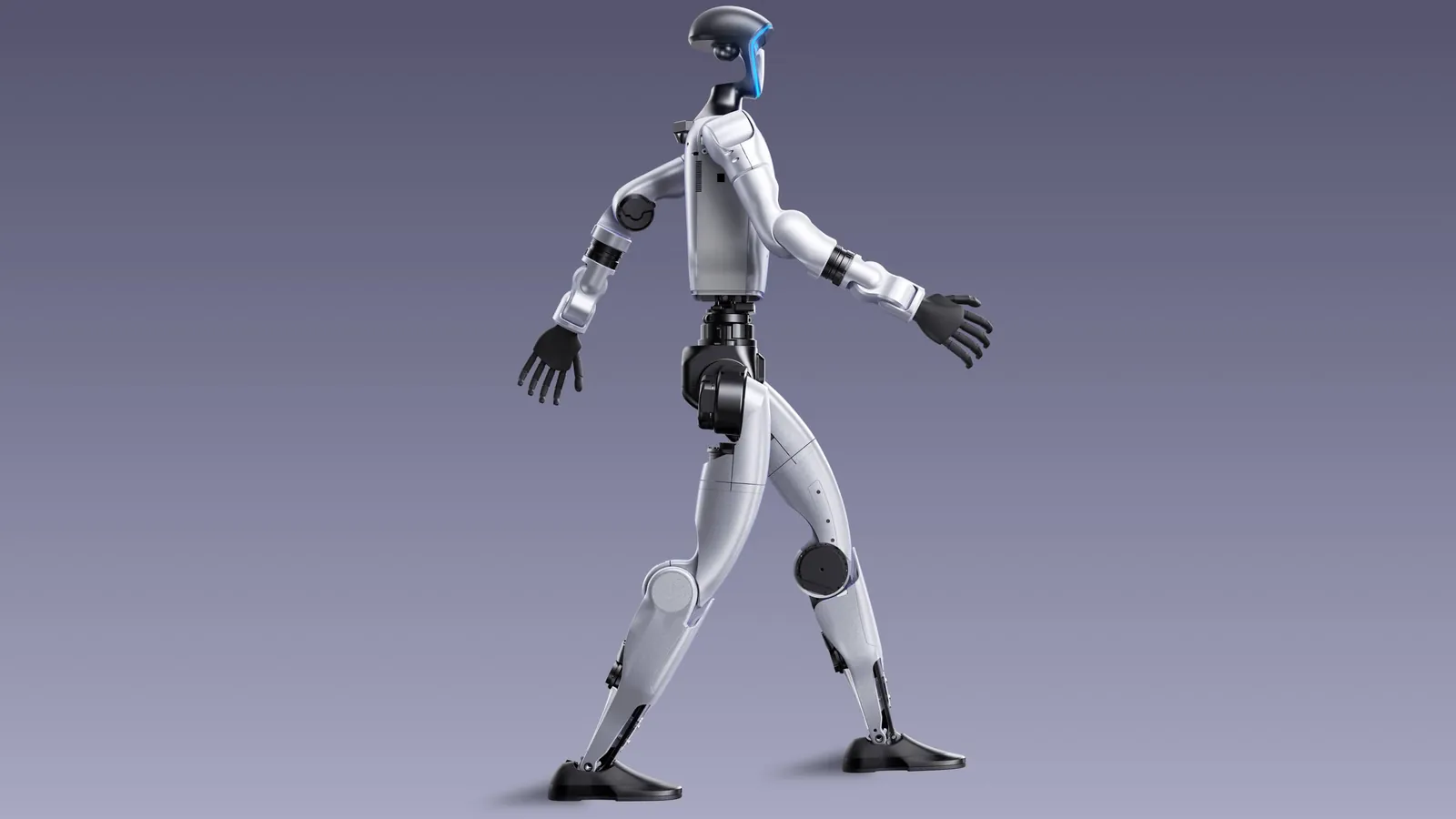
Two of the most talked-about humanoid robots, compared honestly. One you can buy today. The other you cannot.
TL;DR
The Unitree G1 is a real product you can buy today (current store price: $21,600.00). It ships with an SDK, ROS2 support, and an active developer community. The Tesla Optimus Gen 2 is an impressive engineering project, but it remains internal to Tesla with no external sales, no SDK, and no announced availability date for third parties. If you need a humanoid robot in 2026, the G1 is the only realistic option at this price point.
Quick Comparison Table
| Spec | Unitree G1 | Tesla Optimus Gen 2 |
|---|---|---|
| Price | $21,600.00 | Not for sale (estimated $20,000-$30,000 production target) |
| Availability | Available now, ships to the US and 30+ countries | Internal Tesla use only, no external sales announced |
| Height | 127 cm (4'2") | 173 cm (5'8") |
| Weight | 35 kg (77 lbs) | ~57 kg (125 lbs) |
| Total DOF | 43 DOF (23 body + 20 hand) | 28+ DOF (exact count not confirmed) |
| Hand DOF | 10 per hand (Dex3-1 hands) | 11 per hand (tactile fingertips) |
| Walking speed | Up to 2 m/s | ~1.4 m/s (demonstrated) |
| Payload (arms) | 3 kg per arm | ~4.5 kg per arm (estimated) |
| Battery life | ~2 hours active use | ~5 hours (Tesla's target, unverified externally) |
| SDK/API | Yes, Python SDK + ROS2 | No external SDK |
| ROS support | ROS2 Humble | None (proprietary stack) |
| Simulation | Isaac Sim, MuJoCo, Gazebo | Internal only |
| Manufacturer | Unitree Robotics (Hangzhou, China) | Tesla (Austin, TX, USA) |
Unitree G1: What You Get
The Unitree G1 launched in mid-2024 and has steadily improved through firmware and hardware iterations. It is widely used as an entry research humanoid (current store price: $21,600.00). Here is what the G1 actually delivers:
Hardware and Build Quality
The G1 stands 127 cm tall, making it significantly shorter than a human adult. This is a deliberate design choice: lower center of gravity improves stability, and the smaller form factor reduces cost and collision risk. The body uses aircraft-grade aluminum alloy with carbon fiber covers. Build quality is solid; this is not a prototype or a dev kit dressed up as a product.
The 43 degrees of freedom break down as follows: 5 DOF per leg (hip roll/pitch/yaw, knee, ankle), 7 DOF per arm (shoulder x3, elbow x2, wrist x2), 3 DOF torso (pitch, roll, yaw), and 10 DOF per hand with the Dex3-1 dexterous hands. The Dex3-1 hands use 3 fingers with opposed thumb, achieving basic grasping, pinching, and tool holding. They are not as dexterous as 5-finger hands but are adequate for most research manipulation tasks.
Software and Developer Experience
Unitree provides a Python SDK that exposes joint-level control, Cartesian end-effector control, and locomotion commands. ROS2 Humble drivers are available and maintained. The simulation support is excellent: official URDF/MJCF models work in Isaac Sim, MuJoCo, and Gazebo. This matters enormously for sim-to-real research.
The developer community is growing rapidly. GitHub repositories with G1 example code, imitation learning pipelines, and teleoperation setups are appearing weekly. This is the flywheel effect: more units sold means more shared code means more useful the platform becomes.
Real-World Use Cases
Teams are currently using the G1 for:
- Manipulation research: Collecting human demonstration data via teleoperation, training imitation learning policies, and deploying them on the physical robot.
- Locomotion research: Reinforcement learning for walking, stair climbing, and rough terrain navigation.
- Education: Universities using G1 as a teaching platform for humanoid robotics courses.
- Data collection: Generating diverse manipulation datasets for foundation model training. RCSV operates G1 units for this purpose.
Limitations (Honest Assessment)
- Battery life: 2 hours of active use is short. Plan for battery swaps during extended sessions.
- Arm payload: 3 kg per arm limits the objects it can manipulate. Fine for household objects, insufficient for industrial tasks.
- Height: At 127 cm, it cannot reach standard kitchen counters or shelves designed for human height. Tasks requiring a human-height workspace need platform modifications.
- Hand dexterity: The 3-finger Dex3-1 hands cannot perform fine manipulation (threading, button pressing, tool use with human-level dexterity). Adequate for grasping, inadequate for assembly.
Tesla Optimus Gen 2: The State of Play in 2026
Tesla's Optimus (originally "Tesla Bot") has progressed from a person in a bodysuit on stage (2021) to a functioning humanoid robot doing real work in Tesla factories. The Gen 2 version, shown in late 2023 and improved through 2024-2025, represents serious engineering. But the commercial picture is very different from the G1.
What We Know About the Hardware
The Optimus Gen 2 is human-sized at 173 cm and weighs approximately 57 kg. It uses Tesla-designed actuators across 28+ degrees of freedom. The hands are the standout feature: 11 DOF per hand with tactile sensing on fingertips, enabling more dexterous manipulation than most competing humanoids.
Tesla claims the actuators use a custom planetary gear design optimized for efficiency and backdrivability. The battery is reportedly based on Tesla's automotive battery technology, giving an estimated 5-hour runtime on a single charge, though this has not been independently verified.
Software Stack
Optimus runs Tesla's proprietary software stack, heavily leveraging their autonomous driving AI infrastructure. The computer vision system uses Tesla's neural network inference hardware (likely a variant of the HW4 chip). Training happens on Tesla's Dojo supercomputer and in-house GPU clusters.
There is no external SDK, no ROS integration, no simulation model available, and no API. For researchers and developers, Optimus is a black box. This is not necessarily permanent, but there is no announced timeline for opening the platform.
Availability Reality
As of April 2026, Tesla Optimus is deployed in Tesla factories for internal tasks. Elon Musk has stated a target of selling Optimus externally for $20,000-$30,000, with timelines that have repeatedly shifted. No units have been sold to external customers. There is no order page, no dealer network, and no announced delivery date.
Tesla's history with product timelines (Full Self-Driving, Cybertruck, Semi) suggests significant caution is warranted when evaluating Optimus availability claims. The technology is real; the timeline for external availability is uncertain.
Performance Comparison
Walking and Stability
The G1 walks at up to 2 m/s, which is a brisk human walking pace. It handles flat surfaces reliably and can navigate gentle slopes and small obstacles. Stair climbing has been demonstrated but is not yet production-reliable for arbitrary stairs. The low center of gravity helps stability but limits step height.
Optimus Gen 2 walks at approximately 1.4 m/s with a more human-like gait. The taller form factor and longer legs produce a more natural stride but create greater fall risk. Tesla has demonstrated walking on flat factory floors; outdoor terrain capability has not been publicly shown.
Manipulation
The G1's 7-DOF arms with Dex3-1 hands perform reliable grasping of objects from 2 cm to 15 cm diameter. The 3-finger design limits in-hand manipulation. For most pick-place-and-arrange tasks, the G1 is adequate.
Optimus Gen 2's 11-DOF hands with tactile sensing are more capable on paper. Tesla has demonstrated sorting objects, handling eggs without breaking them, and folding shirts. However, without external access to the robot, independent benchmarking is not possible.
Battery and Runtime
G1: approximately 2 hours of active manipulation work, 3-4 hours of standing/light tasks. Battery is swappable, which partially compensates for the shorter runtime. Swapping takes about 5 minutes.
Optimus: Tesla claims 5+ hours. If true, this would be a significant advantage for continuous operation. But until independent testing occurs, treat this as an unverified manufacturer claim.
Software Maturity
G1 wins decisively on software accessibility. You can write Python code today that controls the G1. The ROS2 integration means you can use MoveIt2 for motion planning, Nav2 for navigation, and the entire ROS2 ecosystem of perception and planning tools. MuJoCo and Isaac Sim models enable sim-to-real transfer workflows.
Optimus has no external software interface. For research teams, this means Optimus is currently unusable. Even if the hardware is superior, a robot you cannot program is a robot you cannot use.
Use Case Matching: Who Should Get What
- Research labs needing a humanoid platform now: G1. No contest. It is the only option with an SDK and shipping product.
- Companies evaluating humanoid robots for warehouse work: G1 for pilot testing today. Evaluate Optimus when (and if) it becomes available.
- Universities teaching humanoid robotics: G1. Students need to write code and run experiments. You cannot teach with a robot that has no SDK.
- Teams collecting humanoid manipulation data: G1 with VR teleoperation. RCSV offers this as a managed service.
- Companies that only want the best possible hardware, regardless of timeline: Wait for Optimus availability announcements, but have a backup plan.
- Investors evaluating the humanoid robotics market: Both are relevant. G1 represents what is commercially available today. Optimus represents what a trillion-dollar company is investing in for the future.
What About Other Humanoids?
The G1 and Optimus are not the only humanoid robots in development. Brief notes on alternatives:
- Figure 02: Well-funded (Microsoft, NVIDIA, OpenAI investment), impressive demos, but not commercially available. Focused on enterprise logistics. No announced price or shipping date for external customers.
- Agility Digit: Purpose-built for logistics (warehouse tote handling). Available for enterprise pilots. Not a general-purpose humanoid. ~$250,000 price range for early access units.
- Apptronik Apollo: Full-size humanoid targeting manufacturing. Mercedes-Benz partnership. Limited availability, enterprise-only. Pricing not publicly disclosed.
- Fourier Intelligence GR-2: Chinese humanoid competitor. Specs similar to G1 but less mature software ecosystem. ~$20,000-$30,000 range.
- Unitree H1: Unitree's larger humanoid (180 cm). More expensive than G1 (H1 current store price: $99,900.00) but offers human-height reach and higher payload. Consider if the G1's size is a limiting factor.
For a deeper comparison of all humanoid robots, see our 2026 humanoid robot buyer's guide.
Total Cost of Ownership: G1 First Year
Here is a realistic first-year budget for deploying a Unitree G1:
Unitree G1 (current store price for the Basic configuration: $21,600.00; configurations with Dex3-1 hands cost more)
Spare battery pack (current store price: $750.00)
Workstation (Ubuntu, RTX 4090, 64GB RAM): $3,500
Intel RealSense D455 cameras x3 (current store price each: $650.00)
Meta Quest 3 for teleoperation: $500
Workspace modifications (safety mats, charging station): $1,000
Cables, adapters, spare parts: $500
Total hardware: the sum of the items above at current prices
Software: $0 (ROS2, MuJoCo, Isaac Sim community, Python SDK all free)
Integration support (RCSV setup package): $3,000
Ongoing maintenance estimate: $2,000/year
Total first year: total hardware plus the integration and maintenance costs above
For Tesla Optimus, total cost of ownership cannot be calculated because the product is not available for purchase.
Our Verdict
Buy the Unitree G1 if you need a humanoid robot in 2026. It is the only commercially available humanoid at a price point accessible to research labs and startups. The SDK, ROS2 support, and growing community make it a productive research and data collection platform today.
Tesla Optimus is interesting but irrelevant to purchasing decisions in 2026. You cannot buy it. You cannot program it. The technology is impressive, but until Tesla opens external sales and provides developer tools, Optimus is a technology demonstration, not a product you can evaluate or deploy.
The practical advice: buy or lease a G1 now, build your humanoid robotics capabilities, collect data, and train policies. If Optimus becomes available later and proves superior, the skills, data, and insights you develop on the G1 will transfer.
RCSV Has Unitree G1 Units Available for Lease
Start your humanoid robotics pilot without the full capital commitment. RCSV offers G1 leasing with setup support, teleoperation integration, and ongoing maintenance. Contact us for availability and pricing.