







Best Depth Cameras for Robotics 2026: RealSense vs ZED vs Orbbec
RealSense, ZED and Orbbec depth cameras compared for robotics: range, accuracy, price and ROS 2 support.
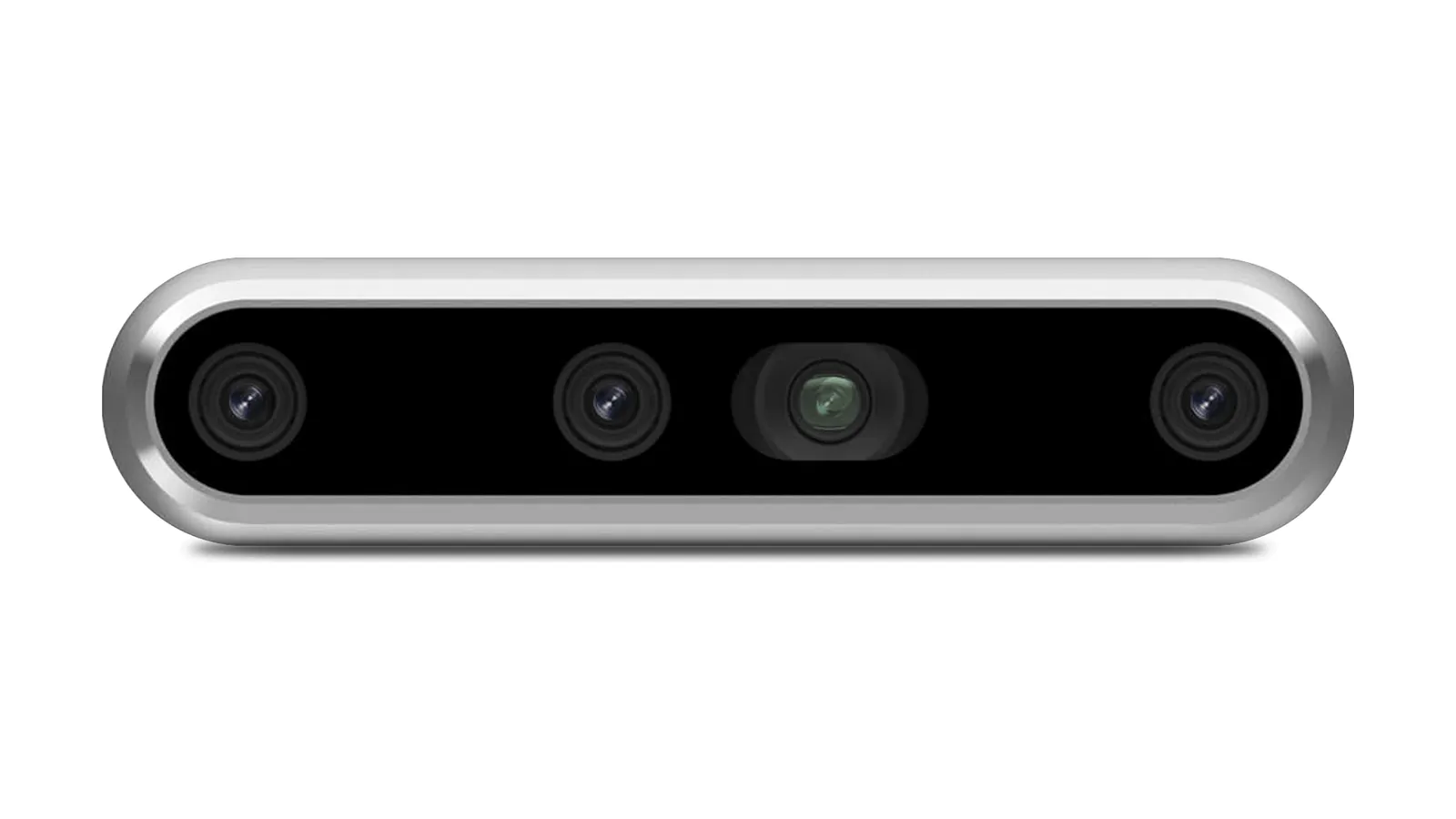
Depth cameras are the eyes of most robot manipulation and navigation systems. They provide the 3D point clouds and aligned RGB-D images that feed into grasp planners, obstacle avoidance, SLAM, and learned visual policies. Choosing the wrong camera wastes months: too short a range and the robot cannot see approaching obstacles, too large a form factor and it cannot mount to a wrist, too much latency and reactive control fails. This guide compares every major depth camera relevant to robotics in 2026, with concrete recommendations for specific tasks.
Quick Pick
Wrist mount → D405. General purpose → D435i. Outdoors → ZED 2i.
Depth Sensing Technologies
Understanding how each camera generates depth data explains most of their strengths and limitations.
Active Infrared Stereo (Intel RealSense, Orbbec Gemini): Two IR cameras observe a projected IR dot pattern. The displacement between matching dots in the left and right images encodes depth. Works well indoors from 0.1m to 6m. Struggles outdoors because sunlight overwhelms the IR projector. Depth quality degrades at longer ranges as the dot pattern becomes sparse. This is the most common technology for manipulation because it provides dense, accurate depth at close range.
Passive Stereo with Neural Depth (Stereolabs ZED): Two RGB cameras capture stereo images, and a neural network running on the host GPU estimates depth from the stereo pair. Works outdoors (no IR projector to be overwhelmed) and at long range (up to 20m). Requires a capable GPU (NVIDIA Jetson or discrete GPU) for real-time inference. Depth quality depends on scene texture -- textureless surfaces (white walls, smooth plastics) produce noisy or missing depth.
Time-of-Flight (Orbbec Femto, Azure Kinect successor): The camera emits modulated IR light and measures the phase shift of reflected light to compute distance. Provides dense depth at moderate resolution with minimal compute. Less affected by texture than stereo methods. Range is typically 0.2-5m. Multi-path interference (light bouncing off multiple surfaces before returning) causes artifacts in corners and concavities.
Camera Comparison Table
| Camera | Technology | Depth Res | RGB Res | Range | FOV (D) | Weight | Interface | ROS2 | Price |
|---|---|---|---|---|---|---|---|---|---|
| RealSense D405 | Active IR Stereo | 1280x720 @ 90fps | 1280x720 @ 90fps | 0.07-1.5m | 87° | 51g | USB-C | Mature | $450.00 |
| RealSense D435i | Active IR Stereo | 1280x720 @ 90fps | 1920x1080 @ 30fps | 0.2-6m | 90° | 72g | USB-C | Mature | $550.00 |
| RealSense D455 | Active IR Stereo | 1280x720 @ 90fps | 1280x800 @ 30fps | 0.4-6m | 95° | 120g | USB-C | Mature | $650.00 |
| ZED 2i | Passive Stereo + Neural | 2208x1242 (from RGB) | 2208x1242 @ 15fps | 0.3-20m | 110° | 175g | USB-C | Good | $499.00 |
| ZED X | Passive Stereo + Neural | 1920x1200 (from RGB) | 1920x1200 @ 60fps | 0.2-20m | 110° | 143g | GMSL2 | Good | $599.00 |
| ZED Mini | Passive Stereo + Neural | 2208x1242 (from RGB) | 2208x1242 @ 15fps | 0.1-15m | 90° | 62.9g | USB-C | Good | $569.00 |
| Orbbec Gemini 335 | Active IR Stereo | 1280x800 @ 30fps | 1280x800 @ 30fps | 0.15-5m | 91° | 78g | USB-C | Good | $330.00 |
| Orbbec Femto Bolt | Time-of-Flight | 1024x1024 @ 30fps | 3840x2160 @ 15fps | 0.25-5.5m | 120° | 178g | USB-C | Good | $418.00 |
| Orbbec Femto Mega | Time-of-Flight | 1024x1024 @ 30fps | 3840x2160 @ 25fps | 0.25-5.5m | 120° | 305g | USB-C / Ethernet | Good | $868.75 |
Intel RealSense: The Research Default
Intel RealSense cameras have been the standard depth camera in robotics research since 2018. The D400 series (D405, D435i, D455) uses active infrared stereo: a laser projector casts an IR dot pattern onto the scene, and two IR cameras compute depth by triangulating the dot displacement. This approach provides dense, accurate depth at close range without requiring GPU compute.
RealSense D405: Best for Wrist Mounting
The D405 is the smallest and lightest RealSense at 51g. Its minimum depth of 7cm makes it the best camera for close-range manipulation -- it can see objects right in front of the gripper. The trade-off is limited range (1.5m max usable) and a narrower field of view than the D435i. The D405 is the camera to mount on a robot wrist for eye-in-hand manipulation policies.
Best for: Wrist-mounted manipulation, close-range grasping (0.1-0.5m), tabletop bin picking, precision placement tasks. The 51g weight adds negligible load to most robot arms.
Limitations: Short range means it cannot serve double duty as both wrist camera and scene overview camera. No IMU (unlike the D435i), so it does not directly support visual-inertial odometry.
RealSense D435i: The All-Rounder
The D435i is the most widely used depth camera in robotics. The "i" denotes an integrated IMU (BMI055 6-axis), enabling visual-inertial SLAM and camera pose estimation. Range extends to 6m with usable depth quality to about 4m. The 90-degree diagonal FOV covers a wide scene without excessive distortion.
Best for: General-purpose robotics: overhead scene cameras for manipulation, mobile robot obstacle detection (indoor), SLAM and navigation, data collection rigs. The built-in IMU makes it the default choice for ORB-SLAM3 and RTAB-Map setups.
Limitations: Minimum depth distance of 20cm means close-range wrist-mounted use has a blind zone right in front of the gripper. The D405 is better for wrist mounting. Depth noise increases significantly beyond 3m.
RealSense D455: Extended Baseline
The D455 has a wider stereo baseline (95mm vs. 50mm for D435i), improving depth accuracy at medium-to-long range (2-6m). It includes an IMU and global shutter on both IR sensors. The larger form factor (120g, 124mm wide) makes it less suitable for wrist mounting but better for fixed overhead or mobile robot installations.
Best for: Mobile robot navigation, warehouse mapping, overhead scene cameras at 2m+ mounting height, any application where accuracy at 2-6m matters more than close-range performance.
Limitations: Minimum depth distance of 40cm -- the widest blind zone in the RealSense lineup. Too heavy and large for wrist mounting on lightweight arms. The wider baseline provides diminishing returns indoors where most objects are within 2m.
RealSense Availability Note
Intel has wound down new RealSense product development. The D400 series cameras remain available through existing inventory and authorized distributors, and the RealSense SDK continues to receive maintenance updates. However, no new RealSense hardware is expected. RCSV stocks refurbished RealSense D405, D435i, and D455 cameras at 15-25% below retail, with full testing and 6-month warranty. For new long-horizon projects, consider Orbbec as a future-proof alternative with the closest feature parity.
Stereolabs ZED: Best for Outdoor and Long Range
ZED cameras use passive stereo vision -- two RGB cameras without an IR projector. Depth is computed by Stereolabs' neural depth estimation running on the host GPU. This approach works outdoors (no IR to be overwhelmed by sunlight), provides long range (up to 20m), and produces high-resolution color images. The trade-off is GPU dependency and reduced accuracy on textureless surfaces.
ZED 2i: Industrial-Grade Passive Stereo
The ZED 2i is the industrial version of ZED 2, with IP66 rating for dust and water resistance. It provides 2K color resolution, built-in IMU and barometer, and up to 20m depth range. The neural depth engine requires an NVIDIA GPU (Jetson Xavier or better for real-time inference).
Best for: Outdoor mobile robots, agricultural robotics, construction site mapping, any application requiring depth beyond 6m or outdoor operation. The IP66 rating makes it suitable for harsh environments where RealSense cameras would need external enclosures.
Limitations: 175g weight and 175mm width make wrist mounting impractical. Requires NVIDIA GPU -- will not work on ARM boards without NVIDIA acceleration (no Raspberry Pi). Depth quality on textureless surfaces (white walls, blank packaging) is significantly worse than active IR stereo cameras. Higher compute requirements than RealSense.
ZED X: GMSL2 for Edge Compute
The ZED X is designed for NVIDIA Jetson platforms, using GMSL2 (Gigabit Multimedia Serial Link) instead of USB for lower latency and more reliable data transfer. It supports 1920x1200 at 60fps with hardware-synchronized capture. The GMSL2 interface requires a GMSL2 capture board (included with Jetson AGX Orin but not with other Jetson models).
Best for: Multi-camera setups on NVIDIA Jetson, autonomous vehicles, high-speed robotics applications requiring synchronized stereo at 60fps. The GMSL2 interface eliminates USB bandwidth bottlenecks when running multiple cameras.
Limitations: GMSL2-only interface restricts it to NVIDIA Jetson platforms with GMSL2 capture capability. Not compatible with standard x86 PCs without additional hardware.
ZED Mini: Compact Passive Stereo
The ZED Mini is the smallest ZED camera at 62.9g, designed for AR/VR and small robot platforms. Its 65mm baseline is shorter than the ZED 2i (120mm), reducing long-range accuracy but improving close-range performance (minimum depth 0.1m).
Best for: Small mobile robots, drone-mounted depth sensing, VR passthrough applications, compact platforms where ZED 2i is too large. The 0.1m minimum depth makes it the only ZED suitable for near-field work.
Limitations: Shorter baseline reduces depth accuracy beyond 5m compared to ZED 2i. Still requires NVIDIA GPU. Its advantages over RealSense and Orbbec Gemini are limited to specific use cases (outdoor, long range, high-res color).
Orbbec: The Rising Alternative
Orbbec has emerged as the most capable RealSense alternative, with both active IR stereo (Gemini series) and ToF (Femto series) cameras. Orbbec cameras are fully supported in ROS2, and several models are pin-compatible with RealSense form factors, making migration straightforward.
Orbbec Gemini 335: Best Value All-Rounder
The Gemini 335 is a direct competitor to the RealSense D435i, using active IR stereo with similar specs (current store prices: Gemini 335 $330.00, D435i $550.00). It provides 1280x800 depth resolution, 0.15-5m range, and a 91-degree FOV. The form factor (78g) is compact enough for many mounting configurations.
Best for: Teams looking for a RealSense D435i equivalent with active manufacturer support. The Gemini 335 is the best price-to-performance depth camera for general robotics in 2026. Orbbec is actively developing new hardware and SDK features, unlike Intel's maintenance-only RealSense support.
Limitations: ROS2 driver is newer and less battle-tested than the RealSense driver, though stability has improved significantly in 2025-2026. Community support and published configurations are smaller than RealSense. No integrated IMU in the base model (the Gemini 335L variant adds an IMU).
Orbbec Femto Bolt: Azure Kinect Successor
The Femto Bolt uses Time-of-Flight depth sensing with a 1024x1024 depth resolution and 4K RGB sensor. It was designed as the successor to Microsoft's Azure Kinect (which used the same Sony ToF sensor). The 120-degree FOV is the widest in this comparison, providing excellent scene coverage from a single viewpoint.
Best for: Full-body tracking, wide-area scene understanding, skeleton detection, gesture recognition, and applications that previously used Azure Kinect. The wide FOV and ToF technology provide consistent depth on textureless surfaces where stereo cameras struggle.
Limitations: Larger and heavier (178g) than stereo cameras, making wrist mounting impractical. ToF multi-path interference creates artifacts in tight corners and concavities. 0.25m minimum range is adequate but not ideal for very close manipulation. Multiple ToF cameras in the same room can interfere with each other unless frame-synchronized.
Orbbec Femto Mega: Network-Connected ToF
The Femto Mega adds Ethernet connectivity to the Femto Bolt's ToF sensor, enabling multi-camera setups without USB bandwidth limitations. It also includes an onboard NVIDIA Jetson module for edge processing. At 305g, it is the heaviest camera in this guide and strictly a fixed-mount option.
Best for: Multi-camera capture studios, volumetric capture, research setups requiring 4+ synchronized depth cameras. The Ethernet connection supports PoE (Power over Ethernet) for simplified cabling. Edge processing capability enables on-camera point cloud filtering and compression.
Limitations: Too heavy for any robot-mounted application. Its price (current store price: $868.75) and specialized use case (multi-camera, networked) make it a niche product. Most single-camera robotics applications are better served by the Femto Bolt or Gemini 335.
Which Camera for Which Task
| Task | Best Camera | Why |
|---|---|---|
| Wrist-mounted manipulation | RealSense D405 | Smallest (51g), closest min range (7cm) |
| Overhead scene camera (manipulation) | RealSense D435i or Gemini 335 | Good balance of FOV, range, and depth quality at 0.5-2m |
| SLAM / indoor navigation | RealSense D435i | Built-in IMU for visual-inertial SLAM |
| Outdoor mobile robot | ZED 2i | Passive stereo works in sunlight, 20m range, IP66 |
| Warehouse AMR obstacle avoidance | RealSense D455 | Extended baseline for 2-6m accuracy, IMU for odometry |
| Full-body skeleton tracking | Femto Bolt | 120° FOV, ToF for textureless clothes, Azure Kinect compatible |
| Multi-camera capture studio | Femto Mega | Ethernet + PoE for multi-cam sync, edge processing |
| NVIDIA Jetson edge deployment | ZED X | GMSL2 native, 60fps, hardware sync |
| Data collection rig (imitation learning) | D405 (wrist) + D435i (overhead) | Standard 2-camera setup: close-range wrist + wide scene view |
| Budget-conscious general robotics | Gemini 335 | D435i-class performance (store price: $330.00), active manufacturer support |
Multi-Camera Setups for Imitation Learning
Most imitation learning pipelines use 2-4 cameras to provide the visual observations that policies condition on. The standard setup for tabletop manipulation:
- Wrist camera (1x D405): Mounted to the robot's wrist/forearm, pointing at the gripper workspace. Provides the eye-in-hand view that is most informative for fine manipulation. The D405's 7cm minimum depth and 51g weight make it ideal here.
- Overhead camera (1x D435i or Gemini 335): Mounted 0.8-1.5m above the workspace, pointing down. Provides the bird's-eye scene view for spatial reasoning and object localization. The wider FOV of D435i/Gemini 335 covers the full workspace from a single viewpoint.
- Side camera (optional, 1x D435i): Mounted at workspace edge, providing a lateral view. Useful for tasks with vertical manipulation (stacking, pouring) where overhead and wrist views lack depth information in the vertical axis.
Synchronization: When using multiple USB cameras, bandwidth limitations require careful USB hub topology. Each RealSense D435i at 720p/30fps uses approximately 2 Gbps of USB 3.0 bandwidth. A single USB 3.0 root hub supports 5 Gbps, so a maximum of 2 streaming depth cameras per root hub. Use separate USB controllers (not just hubs) for 3+ cameras. The camera setup guide covers multi-camera configuration in detail.
ROS2 Integration
All cameras in this guide have ROS2 drivers. Here is what to expect:
- RealSense (
realsense2_camera): The most mature ROS2 depth camera driver. Supports all D400 series features: depth, color, IR streams, IMU, post-processing filters (temporal, spatial, decimation), and hardware-triggered frame synchronization. Available viaapt install ros-humble-realsense2-camera. Extensively documented with many community examples. - ZED (
zed-ros2-wrapper): Maintained by Stereolabs. Provides depth, color, IMU, spatial mapping, object detection, and skeleton tracking as ROS2 topics. Requires CUDA and ZED SDK. The driver quality is good but ZED-specific features (neural depth, spatial mapping) add GPU load. Install via Stereolabs Debian repository. - Orbbec (
orbbec-ros2-sdk): Provides depth, color, IR, and IMU streams. The driver has matured significantly through 2025-2026 and is now production-ready for Gemini and Femto series. Available via GitHub; apt packages for common Ubuntu/ROS2 combinations are in progress. Post-processing filter support is less comprehensive than RealSense but covers the essentials (temporal filtering, hole filling).
Refurbished RealSense at RCSV
With Intel winding down RealSense production, new units are becoming harder to source at reasonable prices. RCSV maintains inventory of tested and refurbished RealSense cameras, priced below new units (contact RCSV for current refurbished pricing):
- RealSense D405 (refurbished): Tested depth accuracy, cleaned optics, 6-month RCSV warranty.
- RealSense D435i (refurbished): Full IMU calibration verified, depth quality tested at 0.5m, 1m, and 3m.
- RealSense D455 (refurbished): Baseline alignment verified, global shutter tested.
Refurbished units are an excellent option for labs building multi-camera rigs where the per-camera cost adds up quickly. Contact RCSV for volume pricing on 5+ units.
Choosing the Right Camera: Decision Framework
- Will the camera operate outdoors? If yes: ZED 2i. Active IR stereo cameras do not work in direct sunlight.
- Do you need depth beyond 6m? If yes: ZED 2i or ZED X. All active IR stereo cameras are limited to approximately 6m.
- Is the camera wrist-mounted on a robot arm? If yes: RealSense D405. No other camera matches its size (51g) and close-range performance (7cm minimum).
- Do you need an IMU for SLAM? If yes: RealSense D435i or D455 (hardware IMU, no GPU needed) or ZED 2i (software IMU, requires GPU).
- Is budget the primary constraint? If yes: Orbbec Gemini 335 (current store price: $330.00). The best price-to-performance ratio for general indoor robotics.
- Do you need Azure Kinect compatibility? If yes: Orbbec Femto Bolt. Pin-compatible with Azure Kinect SDK applications.
- For everything else: RealSense D435i if you value ecosystem maturity, Orbbec Gemini 335 if you value active manufacturer support.
Frequently Asked Questions
What is the best depth camera for robotics in 2026?
The best depth camera depends on your application. For close-range manipulation and wrist mounting, the Intel RealSense D405 is the top choice due to its compact size and excellent short-range accuracy. For general-purpose robotics with both near and far requirements, the Orbbec Gemini 335 offers the best balance of performance and price. For outdoor or long-range applications, the Stereolabs ZED 2i provides the best depth range (up to 20m).
RealSense vs ZED: which is better for robotics?
RealSense cameras (D405, D435i, D455) use active infrared stereo for depth, providing accurate short-to-medium range depth (0.1-6m) in a compact form factor. ZED cameras (2i, X, Mini) use passive stereo with neural depth estimation, providing longer range (up to 20m) but requiring more compute and a larger form factor. RealSense is better for manipulation and wrist-mounted applications; ZED is better for navigation, SLAM, and outdoor use.
What depth camera should I use for robot manipulation?
For tabletop manipulation at close range (0.1-1m), use the Intel RealSense D405 -- it has the best close-range accuracy and the smallest form factor for wrist mounting. For manipulation with a wider field of view (bin picking, shelf picking), use the Intel RealSense D435i or Orbbec Gemini 335. Both provide good depth quality in the 0.3-3m range with wider FOV than the D405.
Is the Intel RealSense D435i discontinued?
As of 2026, Intel has wound down new RealSense product development, but the D435i, D405, and D455 remain available through existing inventory and authorized distributors. RCSV stocks refurbished RealSense cameras at discounted prices and provides warranty support. The cameras remain fully functional with current RealSense SDK and ROS2 drivers. However, for new projects with a long timeline, consider Orbbec as a future-proof alternative with active development.
What depth camera works best with ROS2?
All major depth cameras have ROS2 drivers: RealSense cameras use the realsense2_camera package (mature, well-maintained), ZED cameras use the zed-ros2-wrapper (maintained by Stereolabs), and Orbbec cameras use the orbbec-ros2-sdk. RealSense has the most mature ROS2 integration with the most community support and examples. Orbbec's ROS2 support has improved significantly in 2025-2026 and is now production-ready.
How much do depth cameras for robotics cost?
Current store prices for robotics-grade depth cameras: Intel RealSense D405: $450.00, D435i: $550.00, D455: $650.00. ZED Mini: $569.00, ZED 2i: $499.00, ZED X: $599.00. Orbbec Gemini 335: $330.00, Femto Bolt: $418.00. RCSV offers refurbished RealSense cameras at 15-25% discounts and volume pricing on all models.
Related: Robot Camera Setup Guide · Best Robots for Imitation Learning 2026 · Robot End Effector Guide · Hardware Catalog · RCSV Store