Humanoids & mobile manipulators
Match morphology to the task: fixed-base arms for bench work, mobile bases for larger workspaces, quadrupeds for rough terrain, bipeds when you truly need anthropomorphic affordances — with the engineering cost that implies.
Learning outcomes
- Contrast fixed-base and mobile manipulation for safety and planning.
- Name when locomotion adds more value than a bigger arm.
- Relate humanoid hype to measurable tasks and KPIs.
Navigation vs manipulation scheduling, safety volumes, sim-to-real gaps.
For one task, argue fixed arm + slide vs mobile base in bullets.
Define a KPI for a humanoid demo that isn’t “it walked”; share on the Forum.
Self-check
Why are mobile bases harder to debug?
What is a honest classroom scope?
STEM alignment: systems thinking, evaluating claims with evidence, safety & risk awareness.
1. Fixed arm vs mobile manipulation
Fixed-base arms maximize repeatability and simplify safety zones. Adding a mobile base introduces localization, obstacle avoidance, and scheduling between navigation and manipulation — worthwhile when the task truly spans the room.
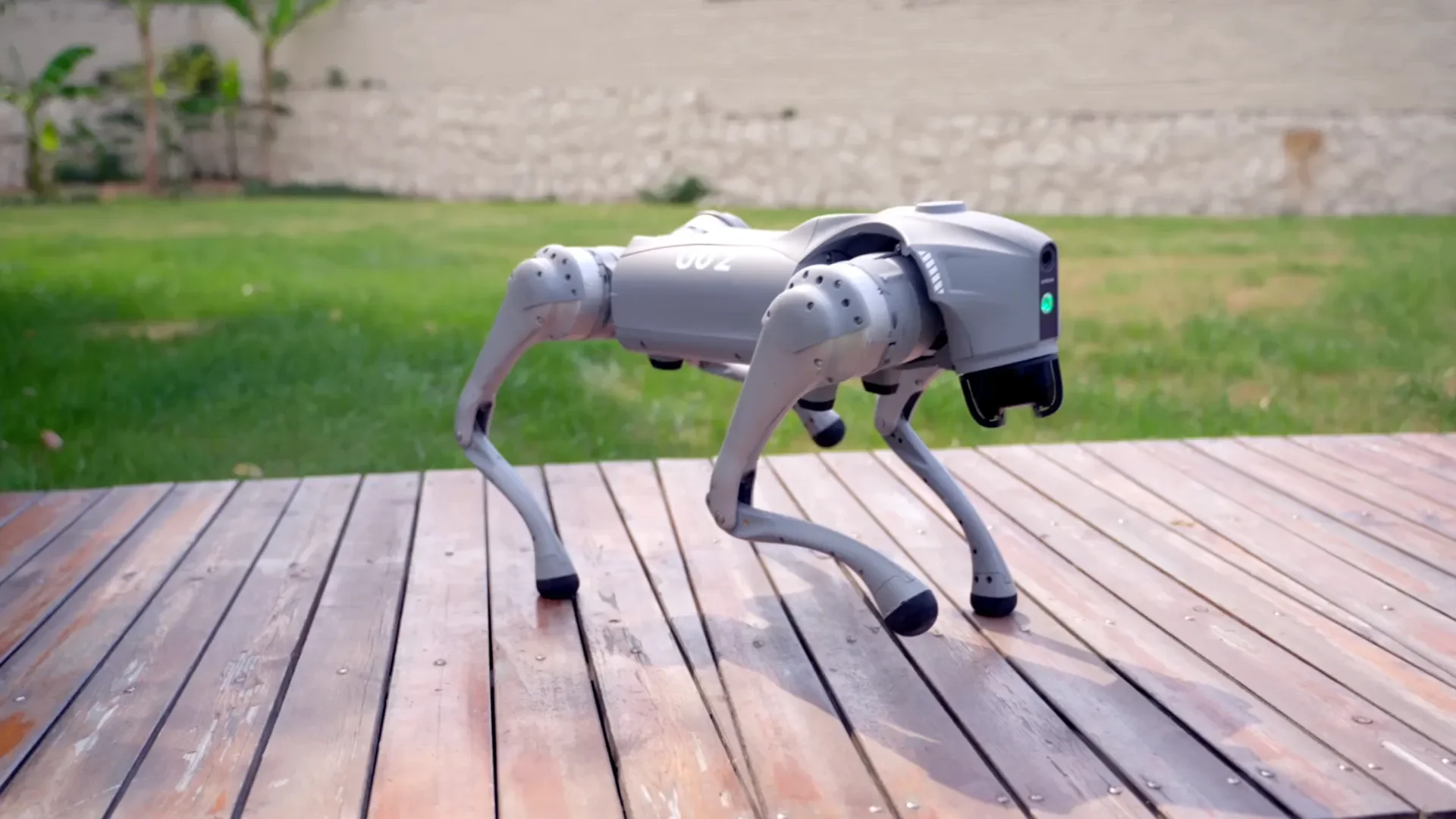
2. Quadrupeds & leg systems
Legged platforms trade mechanical complexity for terrain. Curriculum value: dynamics, contact planning, and sim-to-real — but also higher maintenance and operational risk. Good for advanced cohorts with mentor coverage.
3. Bipedal humanoids
Strong “physical AI” narrative and broad manipulation potential; also the hardest reliability and safety profile. Useful questions: is whole-body coordination required, or would arms on a wheeled base meet the learning goals?
4. Mapping to SVRC inventory
Explore current listings in the store (humanoids, quadrupeds, mobile manipulators) and Humanoid Intelligence Hub for model and dataset context. Selection should follow task, budget, and who will operate repairs.
5. Visiting Palo Alto
Seeing hardware in person reduces abstract debates. Locations · Contact to plan a visit aligned with your roadmap.