Dexterous hands
Parallel grippers close and open. Dexterous hands add fingers and joints so robots can reorient objects in-hand, use tools, and exploit contact — at the cost of control complexity and maintenance.
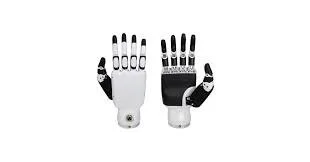
Below: a simplified CSS motion sketch — four fingers curling (not a real kinematic model, just a visual anchor for learners).
Learning outcomes
- Relate DOF and opposition to task requirements (pick vs in-hand manipulation).
- Compare simple grippers vs multi-finger hands for reliability and cost.
- Name at least two real-world failure modes for hands in the field.
Learn
Grasp taxonomy, sensing basics, when a parallel jaw wins.
Practice
Classify three household objects into grasp types; sketch contact points.
Challenge
Debate “gripper vs hand” for one real workflow; post a paragraph on the Forum.
Facilitation: Use the CSS finger demo as a vocabulary anchor only — emphasize that real kinematics and calibration differ by platform.
Self-check
When is a simple gripper enough?
Stable parts, generous tolerances, no regrasp — often faster to deploy and maintain.
What should students notice in failure stories?
Impact, cable fatigue, overheating — link to maintenance in Ownership & care.
STEM alignment: structure & function, trade-offs under constraints, evidence from examples.
Ideas to teach
- DOF & opposition: how many independent motions does each finger have?
- Grasp taxonomy: pinch vs wrap vs lateral — which grasps does your task need?
- Sensing: proprioception vs tactile — where does uncertainty live?
- Failure modes: cable stretch, impact, overheating — why “hands break” in the real world.
Quick FAQs
What makes data “good” for hand policies?
Diverse contact modes, synchronized tactile/proprioception if available, and clear action semantics aligned with your controller. See learning-ready data.
Where does SVRC go deeper?
Read our dexterous hands guide and explore showcase pieces for embodied AI prototyping.